When purchasing a steel bar shearing, tapping and grinding production line, it is necessary to conduct a comprehensive assessment based on production capacity, processing diameter, automation level, and on-site conditions to avoid mismatch between equipment and project requirements and ensure the qualification rate of threaded joints and production continuity.

Capacity planning is based on the number of processed bars per hour and the daily processing tonnage. It is recommended to reserve 15% to 20% capacity margin to cope with peak orders. For scattered construction sites, a basic single-machine combination can be selected; for centralized steel bar processing plants, prefabricated component bases, and engineering projects, an integrated production line with continuous operations from material feeding, fixed-length shearing, tapping, and end face grinding should be chosen to reduce process waiting losses.
The steel bar diameter range is a core parameter. It is necessary to confirm that the equipment is compatible with HRB400 and HRB500 high-strength threaded steel and to check the minimum and maximum processing specifications. When processing large-diameter steel bars, it is necessary to carefully confirm the shearing force of the main machine and the torque of the tapping main shaft to prevent tooth breakage and dimensional deviations of different lengths.
Automation level directly affects manpower and the stability of finished products. Semi-automatic models have high cost performance and are suitable for projects with small batches and multiple specifications changes; CNC fully automatic production lines are equipped with a servo fixed-length system, with parameters that can be stored and called, and automatically complete feeding, shearing, tapping, and grinding, resulting in stronger joint consistency and suitable for long-term standardized batch production.

Site layout needs to calculate the total length of the equipment, the storage areas for raw materials and finished products, and the transfer channels. At the same time, check the power supply and gas supply conditions. In sites with limited space, compactly arranged models can be selected.
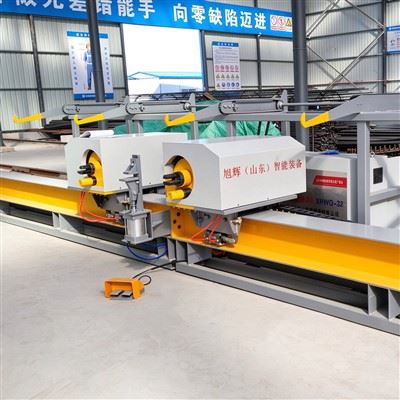
Key configurations to focus on: servo feeding mechanism, hard alloy thread rolling wheel, wear-resistant grinding components, heavy-duty shearing knife holder, stable PLC control system. Prioritize equipment with good component versatility, overseas after-sales support, to reduce the risk of downtime and meet the requirements for steel bar connection processing in road and bridge, housing construction, and prefabricated engineering.