As construction and infrastructure projects continue to expand worldwide, the demand for efficient, reliable, and intelligent rebar processing equipment is increasing. For overseas customers, purchasing rebar processing equipment is not simply a matter of selecting a machine and arranging shipment. A successful project also involves technical communication, equipment manufacturing, quality inspection, export packaging, international shipping, installation, commissioning, operator training, and after-sales technical support.
For this reason, reliable overseas delivery should be viewed as a complete project process rather than a simple equipment shipment.
What Overseas Customers Need From a Rebar Equipment Manufacturer
When purchasing rebar processing equipment internationally, customers are usually concerned about several key factors: equipment quality, processing accuracy, production capacity, delivery time, installation, and technical support.
The challenge is that these requirements are closely connected.
A machine with good performance still needs to be manufactured according to the customer's specifications. It must then be properly tested before shipment, securely packaged for transportation, and correctly installed and commissioned at the customer's facility.
For this reason, choosing a reliable China rebar processing equipment manufacturer means looking beyond the equipment price. Manufacturing capability, technical communication, quality control, export experience, and after-sales service all contribute to the success of an overseas equipment project.
Manufacturing Capability Is the Foundation of Reliable Delivery
Reliable overseas delivery starts with reliable manufacturing.
Rebar processing machines are often required to operate continuously in demanding production environments. Mechanical structures, transmission systems, electrical components, control systems, hydraulic systems, and other key components must work together to maintain stable operation.
Before production begins, technical requirements should be clearly confirmed. These may include:
* Rebar diameter
* Processing length
* Bending dimensions
* Cage diameter and length
* Production capacity
* Automation requirements
* Electrical specifications
* Product configuration
* Applicable project requirements
Clear technical communication at this stage helps ensure that the final equipment configuration matches the customer's actual application.
According to Xuhui's official website, the company was established in 2020 and its predecessor, Jining Construction Machinery Parts Factory, was founded in 1996. The company focuses on intelligent steel bar processing equipment and provides customized R&D, low-energy-consumption design, and integrated delivery.
A Complete Product Range for Different Rebar Processing Applications
Different construction projects require different types of rebar processing equipment.
For example, a precast concrete factory may need high-efficiency stirrup and bending equipment, while bridge and pile foundation projects may require steel cage fabrication systems. Large rebar processing centers may require several machines working together to cover cutting, bending, welding, and other processes.
Xuhui's current product categories include:
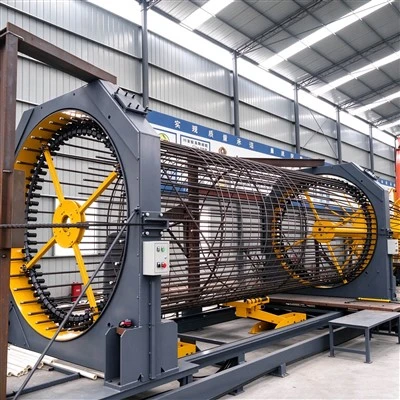
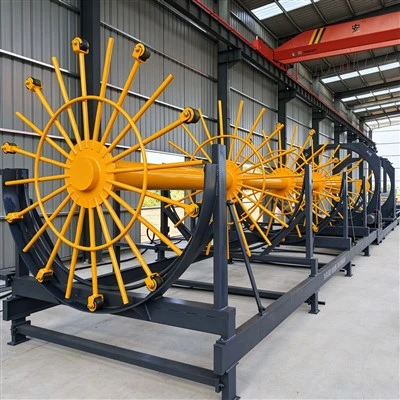
* Steel Cage Forming Equipment
* Rebar Processing Production Lines
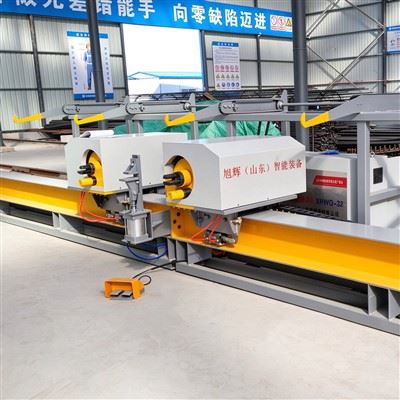
* Steel Bar Bending and Forming Equipment
* Welding Automation Equipment
* Metal Cutting and Forming Equipment
The product range includes CNC rebar cage rolling welding machines, CNC Steel Reinforcement Cage Welding Workstation, rebar sawing and threading production lines, CNC steel bar shearing production lines, steel bar bending machines, mesh welding machines, intelligent welding robots, CNC straightening and cutting machines, metal saws, laser cutting machines, CNC Steel Bar Bending Forming Machine, and other equipment.
This allows customers to purchase individual machines or configure multiple machines into a complete rebar processing system based on their production requirements.
Pre-Shipment Inspection Ensures Equipment Readiness
Before equipment is shipped overseas, pre-shipment inspection is an important quality-control step.
The inspection process may include mechanical structure checks, electrical testing, control-system testing, safety-device checks, trial operation, and verification of key processing functions.
For automated production lines, different stations also need to be tested for coordinated operation.
For example, a rebar processing line may integrate feeding, straightening, cutting, bending, counting, and conveying. A steel cage production system may involve cage forming, reinforcement positioning, welding, and other operations.
Testing these functions before shipment helps identify potential issues at the manufacturing stage and reduces unnecessary commissioning difficulties after delivery.
For overseas customers, this provides an additional level of confidence before the equipment leaves the factory.
Professional Export Packaging and International Shipping
After inspection, the equipment must be prepared for international transportation.
Industrial machinery can experience vibration, loading and unloading, humidity, dust, and other environmental conditions during transportation. Proper export packaging is therefore essential.
Large structural components need to be securely fixed, while electrical cabinets, precision components, accessories, and other sensitive parts require appropriate protection.
For complete production lines, equipment identification and packing arrangements can also be organized according to the installation sequence where practical. This makes unloading and installation more efficient after the equipment arrives.
International transportation then requires coordination of loading, shipping arrangements, export documents, and destination delivery.
For customers purchasing rebar processing equipment from China, clear communication regarding equipment dimensions, packing lists, shipping schedules, and delivery arrangements can help both sides coordinate the project more efficiently.
Installation and Commissioning After Delivery
Equipment delivery is only one milestone in an overseas project.
Once the machinery arrives at the customer's facility, installation and commissioning are required before formal production can begin.
The installation process may include mechanical assembly, electrical connection, sensor installation, control-system setup, safety checks, and machine alignment.
After installation, the equipment needs to be tested under operating conditions.
For example, rebar bending equipment may need to be configured according to rebar diameter, bending angle, bending radius, and processing pattern.
Steel cage equipment may require adjustment according to cage diameter, cage length, longitudinal reinforcement arrangement, spiral reinforcement spacing, and welding requirements.
Professional commissioning helps ensure that the equipment is properly configured for the customer's actual production requirements.
Operator Training and Technical Support
Automated equipment can reduce manual operations, but trained operators are still essential.
Before production begins, operators should understand equipment operation, parameter setting, production procedures, safety requirements, routine maintenance, and basic troubleshooting.
For CNC equipment, operators may also need to learn how to select processing programs, modify production parameters, and switch between different product specifications.
Technical documentation, including operating manuals, electrical drawings, maintenance instructions, and component information, can further support daily operation and maintenance.
For overseas customers, remote technical support can also be valuable. Engineers can provide assistance through video communication, photographs, videos, electrical diagrams, and other technical information.
This allows many common operating and adjustment issues to be addressed efficiently without unnecessary equipment downtime.
Supporting Complete Rebar Processing Solutions
Modern rebar processing is increasingly moving toward automation and integrated production.
Instead of relying on several independent machines, customers can configure equipment according to their complete production workflow.
A rebar processing center, for example, may include:
1. Rebar straightening and cutting equipment
2. Rebar sawing equipment
3. Threading and end-processing equipment
4. Rebar bending equipment
5. Stirrup bending equipment
6. Steel cage rolling welding equipment
7. Welding automation systems
8. Auxiliary material-handling equipment
By integrating different processes, customers can reduce unnecessary material handling and improve production organization.
For large infrastructure projects, integrated equipment solutions can also simplify equipment management, operator training, maintenance, and technical communication.
This is particularly valuable for overseas customers who prefer to work with one experienced manufacturer for multiple equipment requirements.
Why Choose an Experienced China Rebar Equipment Supplier?
For overseas buyers, equipment selection should be based on more than machine specifications.
A suitable supplier should be able to understand the customer's application, recommend appropriate equipment, confirm technical details, complete manufacturing according to the agreed specifications, and provide support throughout delivery and commissioning.
Important factors include:
* Manufacturing experience
* Technical development capabilities
* Product range
* Quality-control procedures
* Customized equipment solutions
* Export packaging
* International delivery coordination
* Installation and commissioning support
* Operator training
* After-sales technical service
Xuhui's official website identifies customized R&D, low-energy-consumption design, and integrated delivery as key capabilities. Its product portfolio also covers multiple areas of steel reinforcement processing and metal fabrication.
This integrated approach allows customers to communicate their requirements directly with the manufacturer and develop equipment configurations according to specific project needs.
From Factory Manufacturing to Overseas Project Delivery
A successful overseas equipment project requires coordination across multiple stages.
The process generally follows this path:
Technical Consultation → Equipment Design → Manufacturing → Pre-Shipment Inspection → Export Packaging → International Shipping → Installation → Commissioning → Operator Training → Technical Support
Each stage contributes to the final performance of the equipment.
Technical consultation determines the correct configuration. Manufacturing determines equipment quality. Inspection verifies readiness before shipment. Packaging protects the machinery during transportation. Installation and commissioning prepare the equipment for production. Training and technical support help customers operate the equipment effectively over the long term.
For this reason, exporting rebar processing equipment from China should be viewed as an integrated service rather than a simple transaction.
Supporting Customers in Global Construction Markets
The global construction industry is increasingly adopting automation and industrialized production methods.
As labor costs rise and project requirements become more demanding, construction companies and rebar processing plants are looking for equipment that can improve productivity while maintaining consistent processing quality.
At the same time, overseas customers increasingly expect equipment manufacturers to provide more comprehensive services, including technical consultation, customized solutions, documentation, delivery coordination, installation, commissioning, training, and after-sales support.
For equipment manufacturers, international competitiveness therefore depends not only on product quality but also on the ability to provide a complete and reliable customer experience.
Xuhui focuses on intelligent steel bar processing equipment and related manufacturing technologies, providing solutions for steel cage fabrication, rebar bending and cutting, welding automation, and other metal processing applications.
Professional Conclusion
The growing demand for infrastructure construction is creating new opportunities for automated rebar processing equipment in international markets. As construction projects become larger and production processes become increasingly industrialized, efficient and reliable rebar processing systems are becoming an important part of modern construction manufacturing.
For overseas customers, purchasing rebar processing equipment from China can provide access to a broad range of equipment and customized manufacturing solutions. However, successful equipment delivery depends on much more than the machine itself.
Reliable manufacturing, accurate technical communication, strict quality inspection, professional export packaging, coordinated international shipping, efficient installation and commissioning, operator training, and responsive technical support all contribute to the success of an overseas equipment project.
As a manufacturer specializing in intelligent rebar processing equipment, Xuhui (Shandong) Intelligent Equipment Co., Ltd. is committed to providing practical equipment solutions for construction, infrastructure, precast concrete, and steel fabrication applications.
From individual machines to integrated rebar processing systems, Xuhui works with customers to understand their production requirements and develop suitable equipment configurations.
For companies planning to purchase or upgrade rebar processing equipment for overseas projects, selecting a manufacturer capable of supporting the complete process from factory production to final commissioning can help create a more efficient and reliable equipment procurement experience.
With a focus on manufacturing quality, customized solutions, integrated delivery, and long-term technical support, Xuhui is committed to building sustainable cooperation with customers worldwide and providing reliable rebar processing equipment for the global construction and infrastructure industry.