


As a provider of Steel Mesh Welding Robots, I am often asked about the programming methods for these remarkable machines. In this blog, I will delve into the programming techniques and considerations for steel mesh welding robots, offering insights into how they operate and the benefits they bring to the welding industry.
Understanding the Basics of Steel Mesh Welding Robots
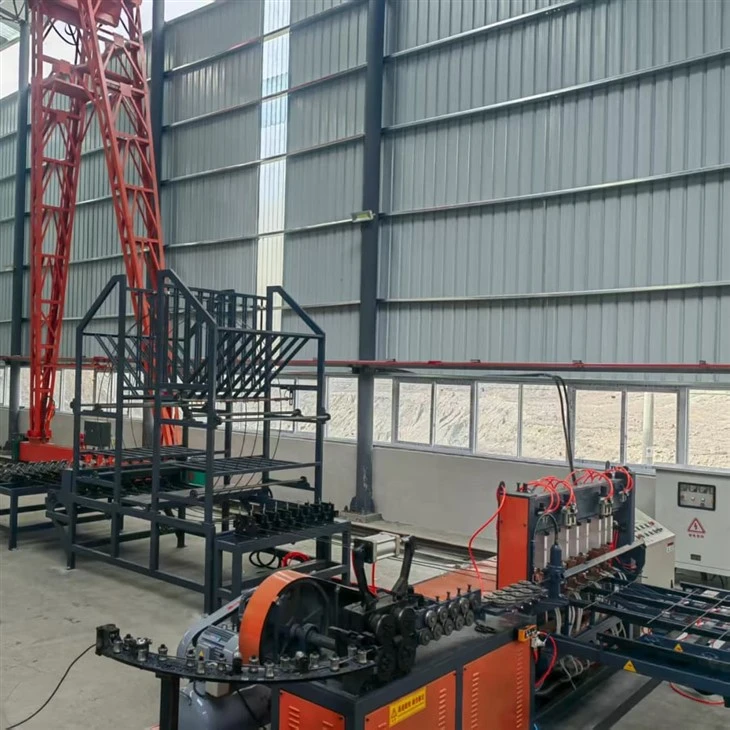
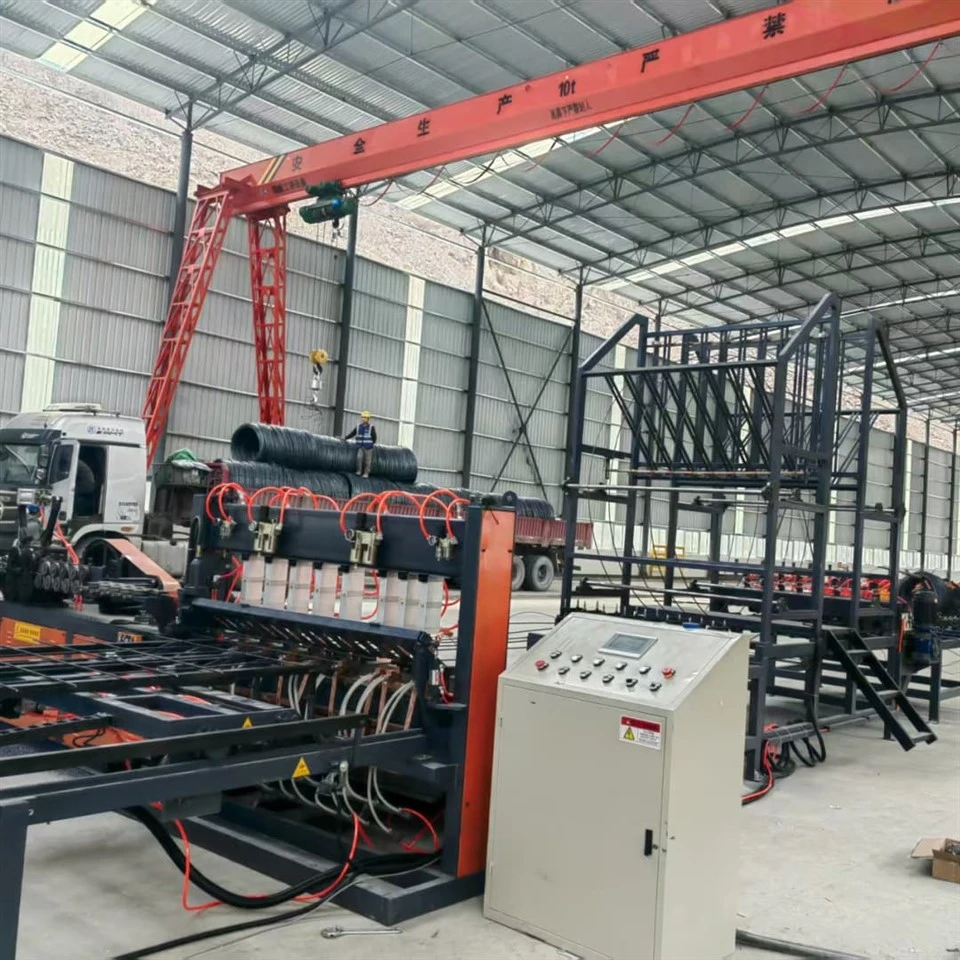
Steel mesh welding robots are designed to automate the process of welding steel wires together to form meshes. These robots are equipped with advanced sensors, actuators, and control systems that enable them to perform precise and efficient welding operations. The programming of these robots is crucial to ensure that they can produce high-quality steel meshes with consistent dimensions and strength.
Programming Languages and Tools
The programming of steel mesh welding robots typically involves the use of specialized programming languages and tools. One of the most commonly used programming languages in the robotics industry is Robot Operating System (ROS). ROS provides a flexible and modular framework for developing robotic applications, allowing programmers to easily integrate different sensors, actuators, and algorithms.
In addition to ROS, many steel mesh welding robots also support proprietary programming languages and interfaces provided by the robot manufacturers. These languages are often designed to be user-friendly and intuitive, allowing operators to quickly program the robot to perform specific welding tasks.
Programming Steps
The programming process for a steel mesh welding robot typically involves the following steps:
1. Task Definition
The first step in programming a steel mesh welding robot is to define the welding task. This includes specifying the dimensions and shape of the steel mesh, the welding parameters (such as welding current, voltage, and speed), and the sequence of welding operations.
2. Path Planning
Once the welding task is defined, the next step is to plan the path that the robot will follow to perform the welding operations. This involves determining the optimal path for the robot to move along the steel mesh, taking into account factors such as the position of the welding electrodes, the size and shape of the mesh, and the presence of any obstacles.
3. Sensor Integration
Steel mesh welding robots are often equipped with a variety of sensors, such as vision sensors, force sensors, and proximity sensors. These sensors are used to provide feedback to the robot's control system, allowing it to adjust its welding operations in real-time based on the actual conditions of the welding environment.
4. Welding Parameter Setup
The welding parameters, such as welding current, voltage, and speed, need to be carefully set to ensure that the welding process is stable and produces high-quality welds. These parameters can be adjusted based on the type of steel wire being used, the thickness of the wire, and the desired strength of the weld.
5. Testing and Validation
Once the robot is programmed, it is important to test and validate the program to ensure that it performs the welding operations correctly. This involves running the robot through a series of test cycles and checking the quality of the welds produced. Any issues or errors in the program can be identified and corrected before the robot is deployed for production.
Advanced Programming Techniques
In addition to the basic programming steps, there are several advanced programming techniques that can be used to improve the performance and efficiency of steel mesh welding robots. These techniques include:
1. Machine Learning
Machine learning algorithms can be used to optimize the welding process by analyzing data from previous welding operations. By learning from past experiences, the robot can adjust its welding parameters in real-time to improve the quality and consistency of the welds.
2. Vision-Based Programming
Vision sensors can be used to provide the robot with a visual representation of the welding environment. This allows the robot to detect the position and orientation of the steel mesh, as well as any defects or abnormalities in the mesh. Based on this information, the robot can adjust its welding operations to ensure that the welds are placed accurately and consistently.
3. Collaborative Programming
Collaborative programming involves the use of multiple robots working together to perform a welding task. This can improve the efficiency and productivity of the welding process by allowing the robots to share the workload and perform different tasks simultaneously.
Benefits of Steel Mesh Welding Robots
The use of steel mesh welding robots offers several benefits over traditional manual welding methods. These benefits include:
1. Increased Productivity
Steel mesh welding robots can perform welding operations at a much faster rate than manual welders. This can significantly increase the productivity of the welding process, allowing manufacturers to produce more steel meshes in less time.
2. Improved Quality
Robots are able to perform welding operations with a high degree of precision and consistency. This results in welds that are stronger, more uniform, and less prone to defects. As a result, the quality of the steel meshes produced by robots is generally higher than those produced by manual welders.
3. Reduced Labor Costs
By automating the welding process, steel mesh welding robots can reduce the need for manual labor. This can result in significant cost savings for manufacturers, especially in industries where labor costs are high.
4. Enhanced Safety
Welding is a dangerous and hazardous process that can pose a risk to the health and safety of manual welders. By using steel mesh welding robots, manufacturers can reduce the risk of accidents and injuries in the workplace.
Our Products and Services
As a leading provider of Steel Mesh Welding Robots, we offer a range of high-quality products and services to meet the needs of our customers. Our products include High Precision Positioning Network Production Line, Tunnel Steel Mesh Forming Machine, and Intelligent Mesh Welding Production Line.
Our team of experienced engineers and technicians is dedicated to providing our customers with the best possible support and service. We offer comprehensive training and technical support to ensure that our customers are able to operate our robots effectively and efficiently.
Conclusion
The programming of steel mesh welding robots is a complex and challenging task that requires a deep understanding of robotics, welding technology, and programming languages. By using advanced programming techniques and tools, manufacturers can optimize the performance and efficiency of their steel mesh welding robots, resulting in higher productivity, improved quality, and reduced costs.
If you are interested in learning more about our Steel Mesh Welding Robots or would like to discuss your specific needs and requirements, please contact us. We look forward to working with you to provide the best possible solutions for your welding needs.
References
- Robotics: Modelling, Planning and Control, Bruno Siciliano, Lorenzo Sciavicco, Luigi Villani, Giuseppe Oriolo
- Industrial Robotics: Technology, Programming, and Applications, Michael P. Groover


