

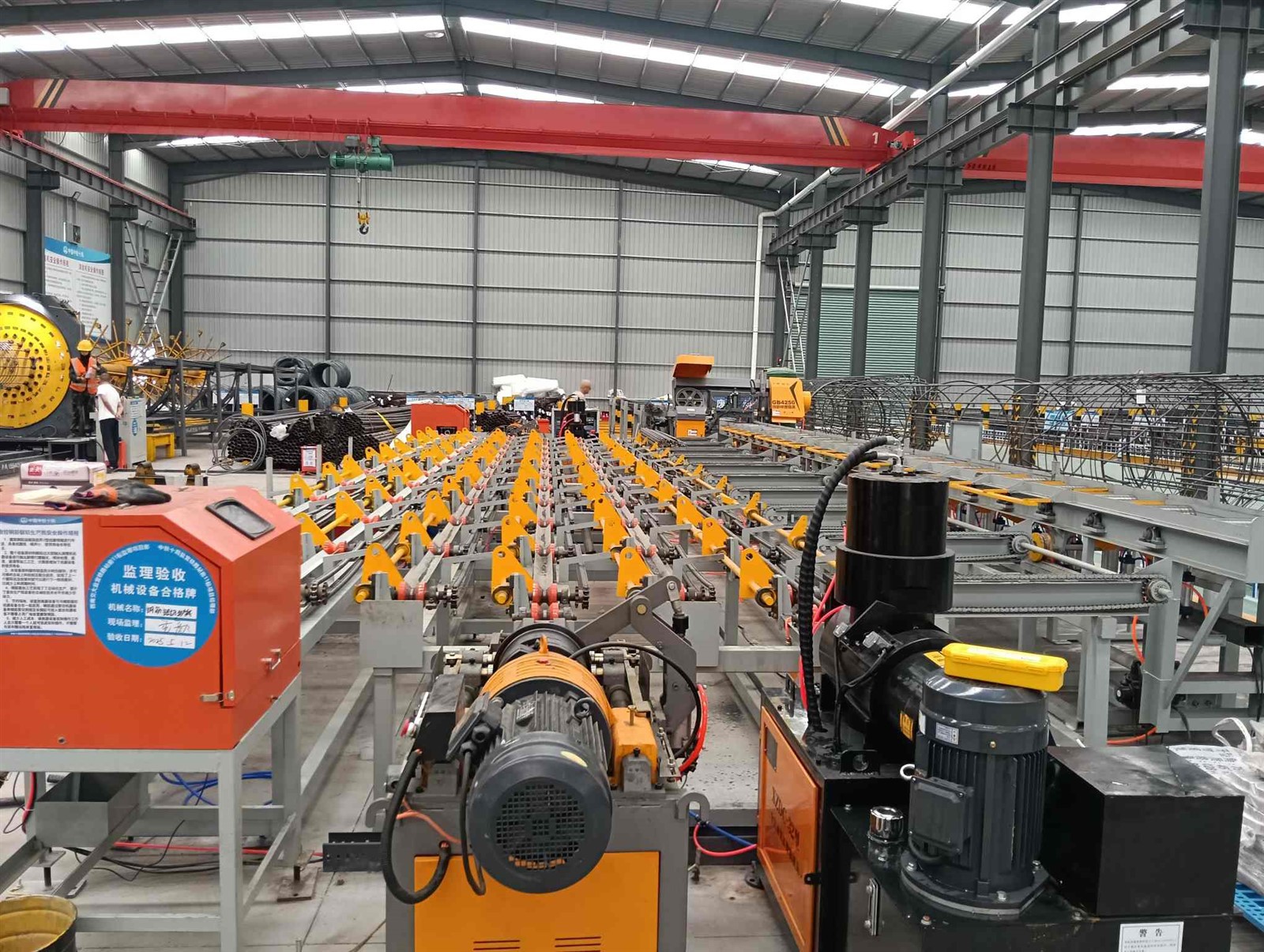
The operation of the steel cage sawing, threading, and pier roughening production line is highly intelligent and requires no complex manual intervention. The specific process is as follows:
Preparatory Work: Parameter Setting and Raw Material Loading
Parameter Configuration:
Select the processing specifications (steel bar diameter, length, pier diameter, thread specification) on the main control touch screen, or recall the stored parameter scheme. The system will automatically synchronize these settings to each module.
Raw Material Feeding:
Place the entire bundle of steel bars (or individual bars) on the material rack of the feeding mechanism. Adjust the height of the rack to align the steel bar axis with the conveying roller track. Press the feeding button, and the equipment will automatically convey the bars to the positioning point.
Fully Automated Processing: Sawing → Roughening → Threading → Grinding
CNC Sawing:
After positioning, the steel bars are conveyed to the sawing machine. The hydraulic fixture automatically clamps the bars, and the high-speed saw blade precisely cuts them to the set length. After cutting, the material head automatically falls into the collection box, while the main bars are transferred to the pier-thickening machine via a conveyor belt.
Automatic Roughening:
Once the roughening machine detects the steel bars, it automatically feeds their ends into the roughening die. The hydraulic system applies high pressure to complete the roughening. After roughening, sensors check the dimensions, and any nonconforming products are automatically removed.
CNC Threading:
Qualified thickened bars are conveyed to the threading machine. After automatic positioning, the threading wheel processes the threads according to the set specifications. During processing, oil is automatically sprayed for cooling and lubrication. When threading is completed, the bar ends are automatically chamfered.
Thread Grinding:
After threading, the bars enter the grinding machine. The steel wire wheel performs all-round grinding on the thread surfaces to remove burrs and oxide scale, ensuring smooth installation of sleeves.
Automatic Sorting and Temporary Storage
The polished steel bars are conveyed to the sorting mechanism. The system automatically distributes them to the corresponding temporary storage stations according to the preset specifications.
Finished Product Transportation and Quality Spot Checks
Workers transfer the finished main bars from the temporary storage station to the steel cage processing area using forklifts or cranes. During transport, care must be taken to prevent thread damage caused by collision.
Key Points for Daily Maintenance and Care
The production line consists of multiple precision modules. Regular maintenance is essential for ensuring stable operation and extending service life. The specific maintenance points are as follows:
1
Daily Maintenance (Once Before Operation and Once After Work)
Clean steel bar debris and oil stains from the surfaces of all modules, focusing on the saw blades of the sawing machine and the threading wheels of the threading machine.
Check the tension of each conveyor belt and adjust it promptly if misaligned.
Start the equipment and conduct an idle run test to verify smooth operation of each module and proper function of the alarm system.
2
Weekly Maintenance
Lubricate the transmission components of each module (such as the sawing machine's guide rails, the roughening machine's guide rods, and the bearings of the conveyor roller track) with lithium-based grease.
Clean the filter screen of the threading machine's oil injection system to ensure smooth oil flow.
Calibrate the sawing length positioning sensor to prevent length deviation.
3
Monthly Maintenance
Inspect the wear condition of the roughening machine die. Replace it if cracks or deformation appear on the surface.
Check the threading wheel's tooth profile accuracy in the threading machine. Replace it when wear exceeds the allowable limit.
Ensure that the terminal blocks in the electrical system are not loose and that the grounding resistance meets the requirement (≤4 Ω).
.