

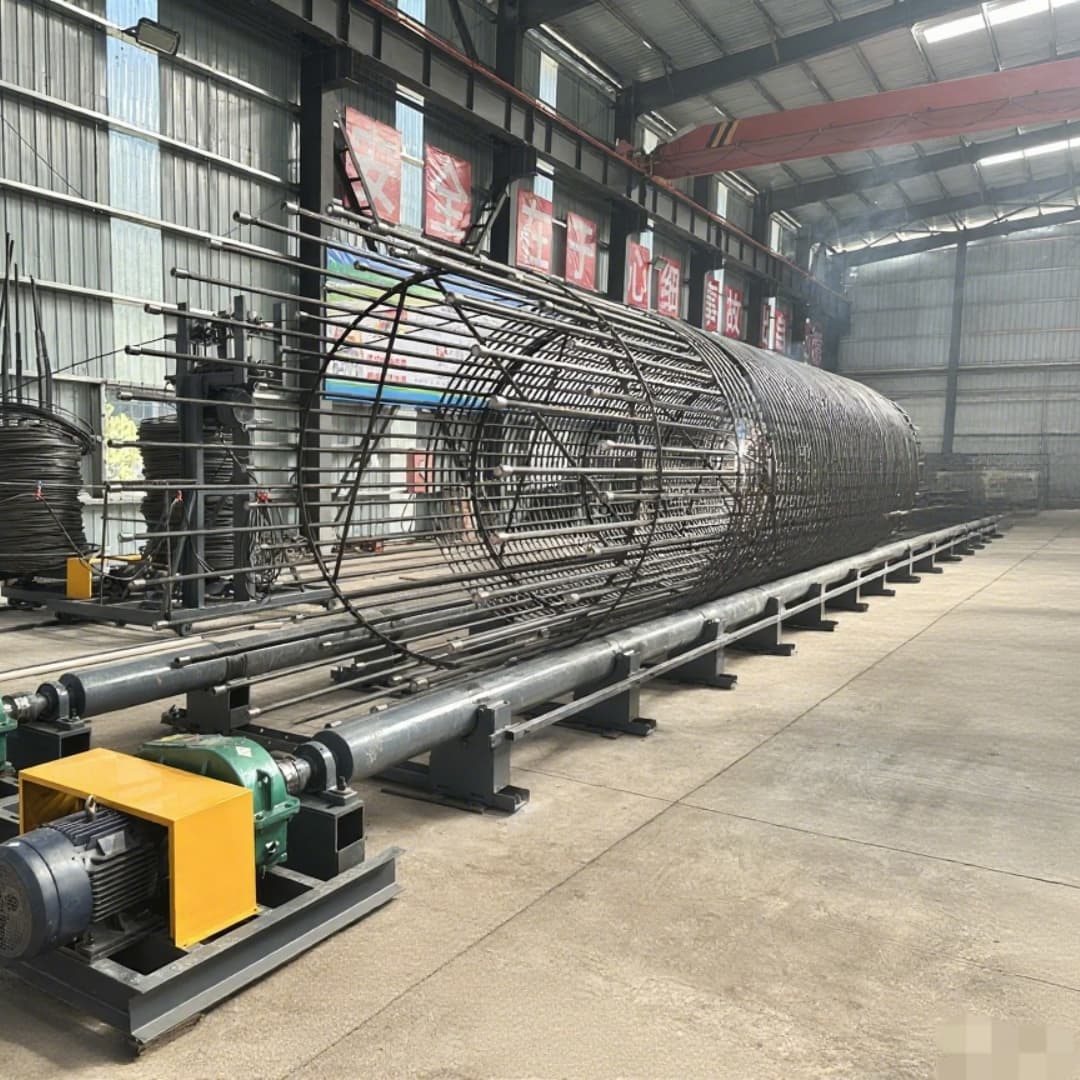
The steel cage winding machine is a key piece of equipment in steel cage processing. Various faults may occur during daily operation. Timely troubleshooting helps ensure production efficiency. Below are common problems and their corresponding solutions:
1. Uneven Spacing of Reinforcing Bars
Causes:
Unstable speed of the rebar feeding motor, abnormal detection by the photoelectric sensor, or wear of mechanical transmission components.
Handling:
Check whether the power supply voltage of the rebar feeding motor is stable, and adjust the frequency converter parameters to maintain a uniform speed. Clean dust from the photoelectric sensor and calibrate the detection position. Inspect transmission components such as chains and gears; replace them if severely worn, and apply lubricating oil regularly to reduce friction.


2. Tendons Are Tensioned Too Loosely or Too Tightly
Causes:
Improper parameter settings of the tension controller, wear of the tension wheel, or inconsistent material properties of the reinforcing bars.
Handling:
Reset the tension controller parameters based on the diameter of the reinforcing bars and conduct a trial winding adjustment. Replace worn tension wheels to ensure uniform force distribution. Sort out steel bars with significant material deviations to avoid abnormal tensioning caused by hardness differences.
3. Abnormal Noise from the Main Unit During Operation
Causes:
Lack of lubrication or damaged bearings, excessive gear backlash, or loose connecting parts.
Handling:
Regularly apply grease to the bearings and replace them if damaged. Adjust gear meshing clearances, and replace gears if necessary. Inspect all connecting bolts and tighten them to the specified torque.


4.Numerical Control System Reports an Error
Causes:
Causes:
Program input errors, interrupted sensor signals, or system software failure.
Handling:
Check the program parameters and re-enter correct instructions. Inspect the sensor circuit connections, and repair any broken wires or poor contact. Restart the system. If the error persists, contact the manufacturer for software repair or upgrades.
Causes:
Misaligned guide wheels, improper steel bar feeding angle, or issues with the straightening mechanism.
Handling:
Adjust the guide wheel positions to align with the centerline of the main unit. Correct the feeding angle of the reinforcing bars and install auxiliary guiding devices if necessary. Inspect the straightening mechanism, replace worn straightening wheels, and ensure the steel bars are fed in a straight line.
Routine Maintenance and Safety Recommendations
During daily operation, the equipment should be regularly cleaned, lubricated, and inspected. Operators must receive professional training and strictly follow operational procedures, which can significantly reduce equipment failures.
For complex issues, it is recommended to contact the equipment manufacturer's technical personnel. Avoid attempting improper self-repair, as it may result in greater damage.