

As a supplier of Steel Mesh Welding Robots, one of the most frequently asked questions I encounter is about the production capacity of these robots per hour. Understanding this is crucial for businesses looking to optimize their manufacturing processes and increase efficiency. In this blog, I'll delve into the factors that influence the production capacity of a steel mesh welding robot and provide some insights based on our experiences in the industry.
Factors Affecting Production Capacity
The production capacity of a steel mesh welding robot is not a fixed number; it varies depending on several key factors. Let's take a closer look at these factors:
1. Mesh Design and Specifications
The complexity of the steel mesh design plays a significant role in determining the production speed. Simple, uniform meshes with consistent wire spacing and dimensions can be welded more quickly than those with intricate patterns or irregular shapes. For example, a standard square mesh with evenly spaced wires will generally have a higher production rate compared to a custom - designed mesh with varying wire diameters and non - standard spacing.
2. Wire Diameter and Material
The diameter and material of the wires used in the mesh also impact production capacity. Thicker wires require more energy to weld and may slow down the welding process. Additionally, different materials have different electrical and thermal properties, which can affect the welding time. For instance, welding stainless steel wires might take longer than welding mild steel wires due to the higher melting point and different conductivity of stainless steel.
3. Welding Parameters
The settings of the welding machine, such as welding current, voltage, and welding time, are critical. Optimal welding parameters are essential for achieving strong and reliable welds. However, finding the right balance can be challenging. If the welding current is too high, it may cause burn - through or damage to the wires. On the other hand, if it's too low, the welds may be weak. Adjusting these parameters to suit the specific mesh design and wire material can either speed up or slow down the production process.
4. Machine Speed and Efficiency
The speed at which the robot can move the wires into position, apply the weld, and release the finished mesh is a major determinant of production capacity. High - quality steel mesh welding robots are designed to operate at high speeds while maintaining precision. Factors such as the type of drive system, the accuracy of the positioning mechanism, and the overall mechanical design of the machine all contribute to its efficiency.
Average Production Capacity
Based on our experience working with a wide range of clients, the production capacity of a typical steel mesh welding robot can vary from 10 to 60 square meters per hour. This is a broad range because it encompasses different mesh designs, wire sizes, and welding requirements.
For example, a basic steel mesh welding robot used for producing simple square meshes with small wire diameters (e.g., 3 - 5mm) can achieve a production rate of around 40 - 60 square meters per hour. These robots are often used in large - scale construction projects where standard meshes are required in high volumes.
On the other hand, if you're working with more complex mesh designs, such as those used in specialized applications like Tunnel Steel Mesh Forming Machine, the production capacity may drop to 10 - 30 square meters per hour. The unique shapes and larger wire diameters often associated with tunnel steel meshes demand more precise welding and slower movement of the machine, resulting in a lower production rate.
Optimizing Production Capacity
To maximize the production capacity of your steel mesh welding robot, here are some strategies you can consider:
1. Standardize Mesh Designs
Whenever possible, standardize your mesh designs. This allows you to set up the welding parameters in advance and run the machine at a consistent speed. By reducing the need for frequent adjustments, you can significantly increase the overall production rate.
2. Use High - Quality Wires
Invest in high - quality wires that are consistent in diameter and material properties. This ensures more stable welding conditions and reduces the likelihood of welding defects, which can cause downtime for repairs and adjustments.
3. Regular Maintenance
Keep your steel mesh welding robot well - maintained. Regularly clean and lubricate the machine, check the welding electrodes for wear, and calibrate the positioning system. A well - maintained machine operates more efficiently and has fewer breakdowns, leading to higher production capacity.

4. Upgrade to Advanced Technology
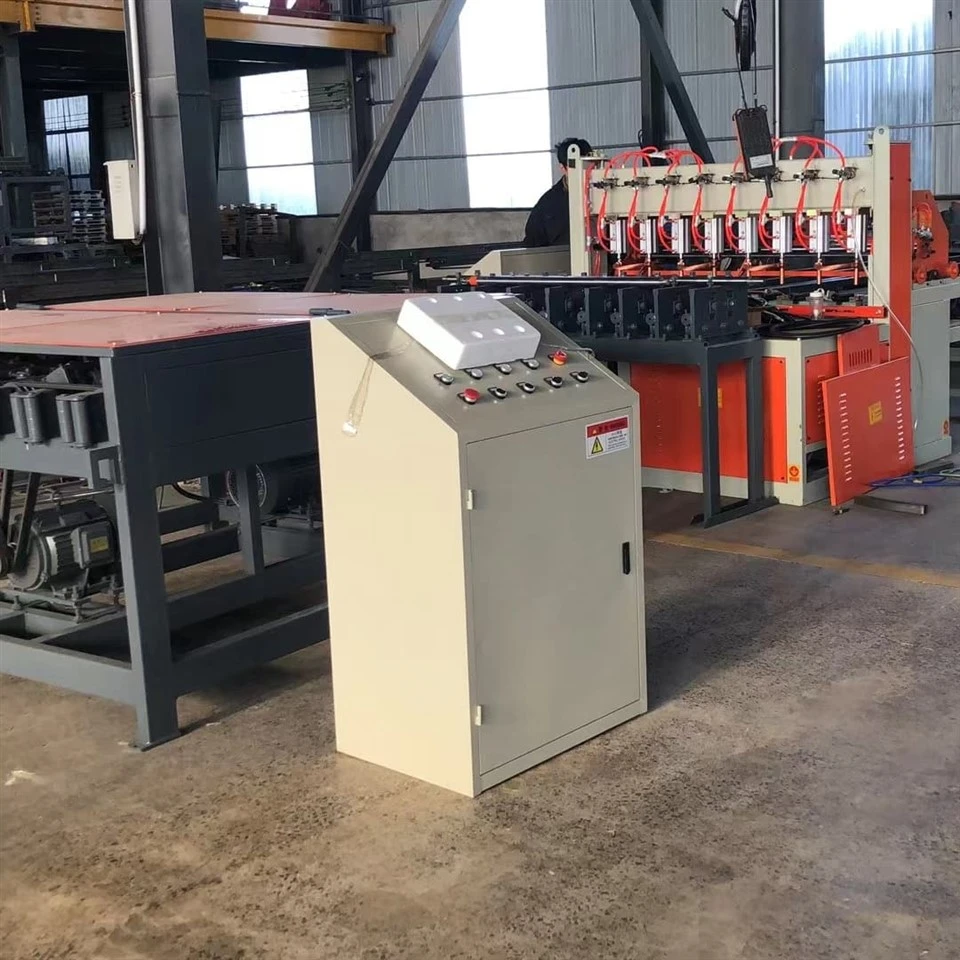
Consider upgrading to a more advanced steel mesh welding robot or adding features such as an Intelligent Mesh Welding Production Line. These advanced systems often come with automated functions, real - time monitoring, and self - adjustment capabilities, which can greatly enhance the production efficiency.
Our Product Offerings
We offer a wide range of steel mesh welding robots to meet the diverse needs of our customers. Our Precision Mesh Welding Machine is designed to provide high - quality welds with excellent precision. It can be customized to handle different wire diameters and mesh designs, making it suitable for a variety of applications.
Whether you're in the construction industry, manufacturing, or any other field that requires steel meshes, our robots can help you increase your production capacity and improve the quality of your products.
Conclusion
The production capacity of a steel mesh welding robot per hour is influenced by multiple factors, including mesh design, wire diameter, welding parameters, and machine efficiency. By understanding these factors and implementing optimization strategies, you can achieve a higher production rate and improve your business's bottom line.
If you're interested in learning more about our steel mesh welding robots or need help in determining the right solution for your production needs, we're here to assist you. Contact us for a detailed discussion on how our products can enhance your manufacturing processes and increase production capacity.
References
- Industry reports on steel mesh manufacturing technology
- Technical specifications of steel mesh welding robots