

How does a steel mesh welding robot ensure the electrical conductivity of the welded steel mesh?
As a leading supplier of Steel Mesh Welding Robots, I've witnessed firsthand the critical role that electrical conductivity plays in the performance of welded steel mesh. In various industries, from construction to electronics, the ability of steel mesh to conduct electricity effectively is often a non - negotiable requirement. In this blog, I'll delve into the mechanisms and technologies that our steel mesh welding robots employ to guarantee high - quality electrical conductivity in the welded steel mesh.
1. Understanding the Basics of Electrical Conductivity in Steel Mesh
Before we explore how our robots ensure conductivity, it's essential to understand what affects the electrical conductivity of steel mesh. Electrical conductivity in steel is primarily determined by the material's composition, the integrity of the metal lattice structure, and the quality of the welds. Impurities in the steel, such as oxides or non - metallic inclusions, can disrupt the flow of electrons, reducing conductivity. Additionally, poor welds can create high - resistance joints, impeding the electrical current.
2. Material Selection and Preparation
Our steel mesh welding robots start the process with meticulous material selection. We work with high - quality steel wires that have low impurity levels and consistent chemical compositions. These wires are carefully inspected before welding to ensure they meet the required standards for electrical conductivity.

In addition to material selection, proper preparation is crucial. The steel wires are cleaned to remove any surface contaminants, such as rust, grease, or oxides. Oxides, in particular, can form an insulating layer on the steel surface, significantly reducing conductivity. Our robots use advanced cleaning techniques, such as mechanical abrasion or chemical cleaning, to ensure a clean and oxide - free surface for welding.
3. Precise Welding Parameters
One of the key factors in ensuring electrical conductivity is the precise control of welding parameters. Our steel mesh welding robots are equipped with state - of - the - art control systems that can accurately adjust parameters such as welding current, voltage, and welding time.
The welding current is a critical parameter as it determines the amount of heat generated during the welding process. Too little current may result in incomplete fusion, creating weak and high - resistance welds. On the other hand, excessive current can cause overheating, which may lead to the formation of brittle intermetallic compounds and damage to the steel's lattice structure, both of which can reduce conductivity. Our robots are programmed to optimize the welding current based on the wire diameter, material type, and the desired weld quality.
Voltage also plays an important role in maintaining a stable arc during welding. A stable arc ensures uniform heat distribution and consistent weld formation. Our control systems continuously monitor and adjust the voltage to keep the arc stable throughout the welding process.
Welding time is another parameter that needs to be carefully controlled. Insufficient welding time may not allow the steel to fully melt and fuse, while excessive welding time can cause distortion and damage to the steel. Our robots are designed to deliver the right amount of energy for the right duration, resulting in strong and conductive welds.
4. Advanced Welding Techniques
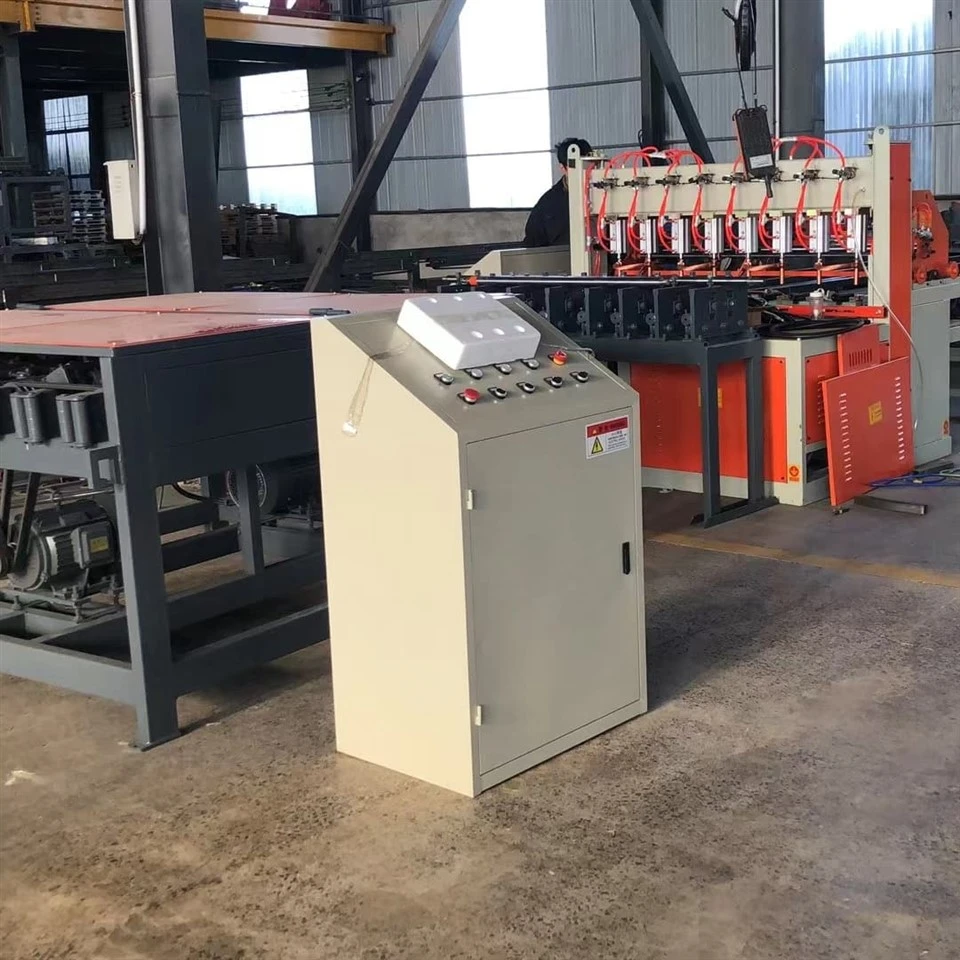
Our steel mesh welding robots utilize advanced welding techniques to ensure high - quality welds and excellent electrical conductivity. One such technique is resistance welding. In resistance welding, an electric current is passed through the steel wires at the point of contact, generating heat due to the electrical resistance of the steel. This heat causes the steel to melt and fuse together, creating a strong and conductive joint.
Resistance welding has several advantages for ensuring electrical conductivity. First, it produces a relatively clean weld with minimal oxidation, as the welding process occurs in a controlled environment. Second, the heat is generated directly at the weld interface, minimizing the heat - affected zone and reducing the risk of damage to the steel's lattice structure.
Another technique we use is gas - shielded welding. Steel Mesh Gas Shielded Welding Machine provides a protective gas environment around the weld, preventing oxidation and ensuring a high - quality weld. The gas also helps to stabilize the arc and improve the transfer of molten metal, resulting in a more uniform and conductive weld.
5. Quality Control and Inspection
To ensure the electrical conductivity of the welded steel mesh, we implement a comprehensive quality control and inspection process. Our robots are equipped with sensors that can monitor various parameters during the welding process, such as temperature, current, and voltage. Any deviations from the set parameters can be detected immediately, and the robot can adjust the welding process accordingly.
After welding, the steel mesh undergoes a series of inspections. Visual inspection is the first step, where trained operators check for any visible defects, such as cracks, porosity, or incomplete fusion. In addition to visual inspection, we also use non - destructive testing methods, such as ultrasonic testing and eddy - current testing, to detect internal defects that may affect electrical conductivity.
Finally, we conduct electrical conductivity testing on the welded steel mesh. This involves measuring the resistance of the mesh using specialized equipment. If the measured resistance is within the acceptable range, the steel mesh is considered to have met the electrical conductivity requirements.
6. Customization for Specific Applications
We understand that different industries have different requirements for electrical conductivity. For example, in the electronics industry, high - precision and low - resistance steel mesh may be required for applications such as electromagnetic shielding. In the construction industry, the steel mesh may need to have sufficient conductivity to meet grounding requirements.
Our steel mesh welding robots can be customized to meet these specific requirements. We can adjust the welding parameters, select different materials, and use specialized welding techniques to produce steel mesh with the desired electrical conductivity. Whether you need a Precision Mesh Welding Machine for high - precision applications or a Large Steel Mesh Welding Machine for large - scale projects, we can provide a solution that meets your needs.
7. Continuous Improvement and Innovation
As a supplier of steel mesh welding robots, we are committed to continuous improvement and innovation. We invest heavily in research and development to stay at the forefront of welding technology. Our team of engineers is constantly exploring new materials, welding techniques, and control systems to further improve the electrical conductivity of the welded steel mesh.
We also collaborate with our customers to understand their evolving needs and challenges. By working closely with our customers, we can develop customized solutions that not only meet their current requirements but also anticipate future trends in the industry.
Conclusion
In conclusion, our steel mesh welding robots ensure the electrical conductivity of the welded steel mesh through a combination of material selection, precise welding parameters, advanced welding techniques, quality control, and customization. By leveraging the latest technologies and our expertise in welding, we can provide high - quality steel mesh that meets the strictest electrical conductivity requirements.
If you are in the market for a steel mesh welding robot that can guarantee excellent electrical conductivity, we invite you to contact us for a detailed discussion. Our team of experts will be happy to assist you in finding the right solution for your specific needs. Whether you are a small - scale manufacturer or a large - scale industrial enterprise, we have the experience and resources to help you achieve your goals.
References
- Welding Handbook, American Welding Society
- Principles of Electric Resistance Welding, Resistance Welder Manufacturers Association
- Non - Destructive Testing Handbook, American Society for Nondestructive Testing