

Hey there! As a supplier of mesh welding machines, I often get asked whether a mesh welding machine can be integrated with other production equipment. Well, the short answer is yes! In this blog post, I'm gonna dive deep into this topic, sharing some insights and real - world examples.
Why Integration Matters
First off, let's talk about why integrating a mesh welding machine with other production equipment is such a big deal. In today's fast - paced manufacturing world, efficiency is king. When you integrate different pieces of equipment, you can create a seamless production line. This means less manual handling, fewer errors, and ultimately, higher productivity.
For instance, if you're making wire meshes for construction purposes, integrating the mesh welding machine with a wire straightening and cutting machine can speed up the entire process. The wire straightening and cutting machine prepares the wires, and then they're directly fed into the mesh welding machine. This reduces the time it takes to transfer materials between different stages of production.
Types of Equipment for Integration
There are several types of production equipment that can be integrated with a mesh welding machine.
Material Handling Equipment
Conveyors are a great example of material handling equipment that can be integrated. They can move the welded meshes from the welding machine to the next stage, like a stacking or packaging area. This eliminates the need for workers to manually carry the heavy meshes, reducing the risk of injuries and increasing the speed of the process.
Automated guided vehicles (AGVs) are another option. These self - driving vehicles can transport materials around the factory floor. They can be programmed to pick up the welded meshes from the mesh welding machine and deliver them to the storage or further processing areas.
Quality Control Equipment
Integrating quality control equipment with the mesh welding machine is also crucial. For example, a vision inspection system can be set up right after the welding process. This system uses cameras and sensors to check the quality of the welded meshes, looking for any defects like broken wires or improper welds. If a defect is detected, the system can automatically sort out the faulty mesh, ensuring that only high - quality products move on to the next stage.
Post - Processing Equipment
Once the meshes are welded, they might need some post - processing. A mesh bending machine can be integrated to shape the welded meshes into the desired forms. For example, if you're making meshes for cages, the bending machine can bend the meshes at the right angles.
Our Mesh Welding Machines and Integration
At our company, we offer a range of mesh welding machines that are designed with integration in mind. Our Intelligent Mesh Welding Production Line is a prime example. This production line is highly customizable and can be easily integrated with other equipment. It comes with advanced control systems that allow for seamless communication with other machines in the production line.
The Precision Mesh Welding Machine is another great option. It offers high - precision welding, and its modular design makes it easy to integrate with other production equipment. Whether you want to add a conveyor or a quality control system, our precision mesh welding machine can handle it.
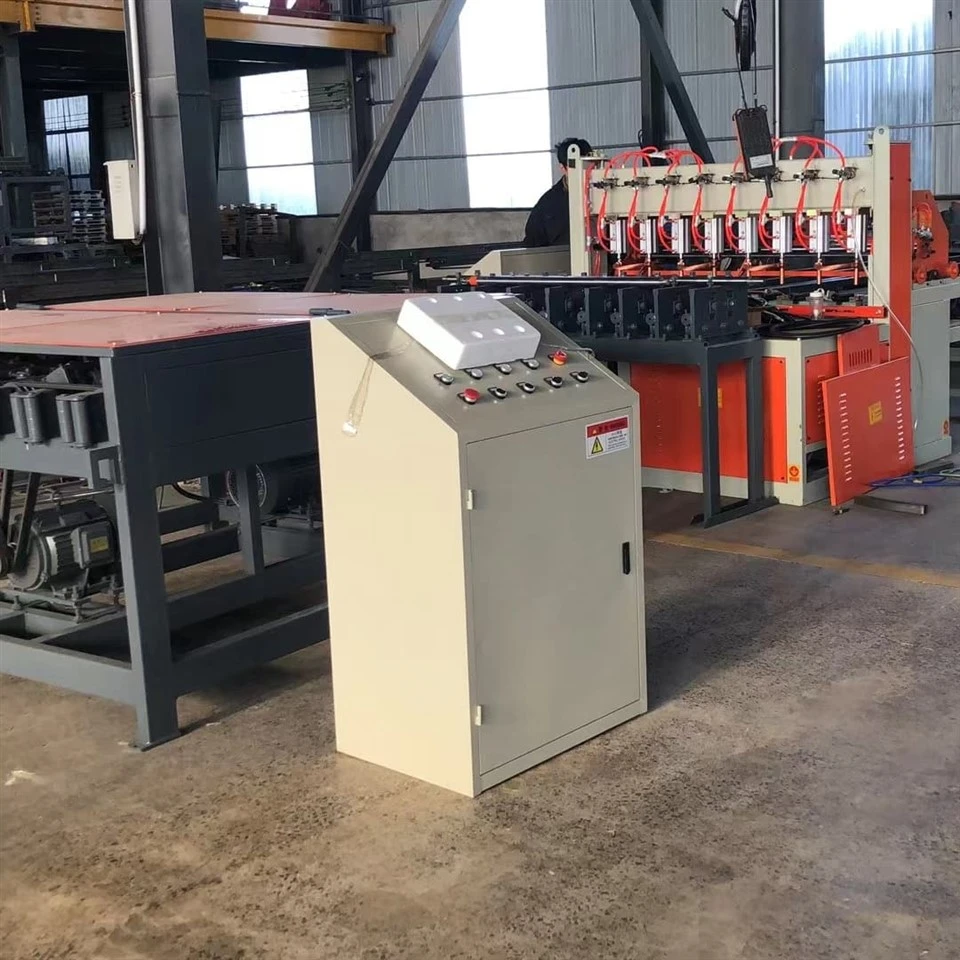

We also have the Steel Mesh Welding Robot. This robot is extremely flexible and can be integrated into complex production lines. It can work in tandem with other robots or equipment, improving the overall efficiency of the manufacturing process.
Challenges of Integration
Of course, integrating a mesh welding machine with other production equipment isn't always a walk in the park. There are some challenges that need to be addressed.
Compatibility Issues
One of the main challenges is compatibility. Different equipment might use different communication protocols or have different power requirements. For example, if you're trying to integrate a new - generation mesh welding machine with an old - fashioned conveyor, they might not be able to "talk" to each other properly. To overcome this, you might need to use interface devices or upgrade the older equipment.
Space Constraints
Factory space can also be a limiting factor. Integrating multiple pieces of equipment requires a significant amount of space. You need to carefully plan the layout of the factory to ensure that all the equipment can fit in and that there's enough room for workers to move around safely.
Technical Expertise
Integrating the equipment also requires technical expertise. You need to have a team of engineers who understand how the different machines work and how to make them communicate with each other. If you don't have in - house expertise, you might need to hire external consultants.
Overcoming the Challenges
Despite the challenges, there are ways to overcome them.
Standardization
Using standardized communication protocols and interfaces can help with compatibility issues. Many modern production equipment is designed to follow certain industry standards, which makes it easier to integrate different machines.
Space Planning
Proper space planning is essential. You can work with an industrial engineer to design a factory layout that maximizes the use of space. They can suggest the best placement of the equipment to ensure smooth material flow and efficient operation.
Training and Support
To address the technical expertise issue, you can provide training for your employees. Our company offers training programs for customers who purchase our mesh welding machines. We also provide after - sales support to help with any integration issues that might arise.
Real - World Examples
Let's take a look at some real - world examples of successful integration.
A construction materials manufacturing company integrated our mesh welding machine with a conveyor system and a mesh bending machine. The conveyor moved the welded meshes from the welding machine to the bending machine, and then the bent meshes were stacked for storage. This integration reduced the production time by 30% and increased the overall output by 20%.
Another example is a furniture manufacturing company. They integrated our mesh welding machine with a vision inspection system. The inspection system detected any defects in the welded meshes, and the faulty meshes were automatically removed from the production line. This improved the quality of the final products and reduced the number of customer complaints.
Conclusion
So, to sum it up, a mesh welding machine can definitely be integrated with other production equipment. The benefits of integration, such as increased efficiency, improved quality, and reduced labor costs, far outweigh the challenges.
If you're interested in integrating a mesh welding machine into your production line, or if you have any questions about our products, feel free to reach out. We're here to help you create a more efficient and productive manufacturing process.
References
- "Automation in Manufacturing: Principles and Applications" by David A. Dornfeld
- "Industrial Engineering and Management" by Hamdy A. Taha