

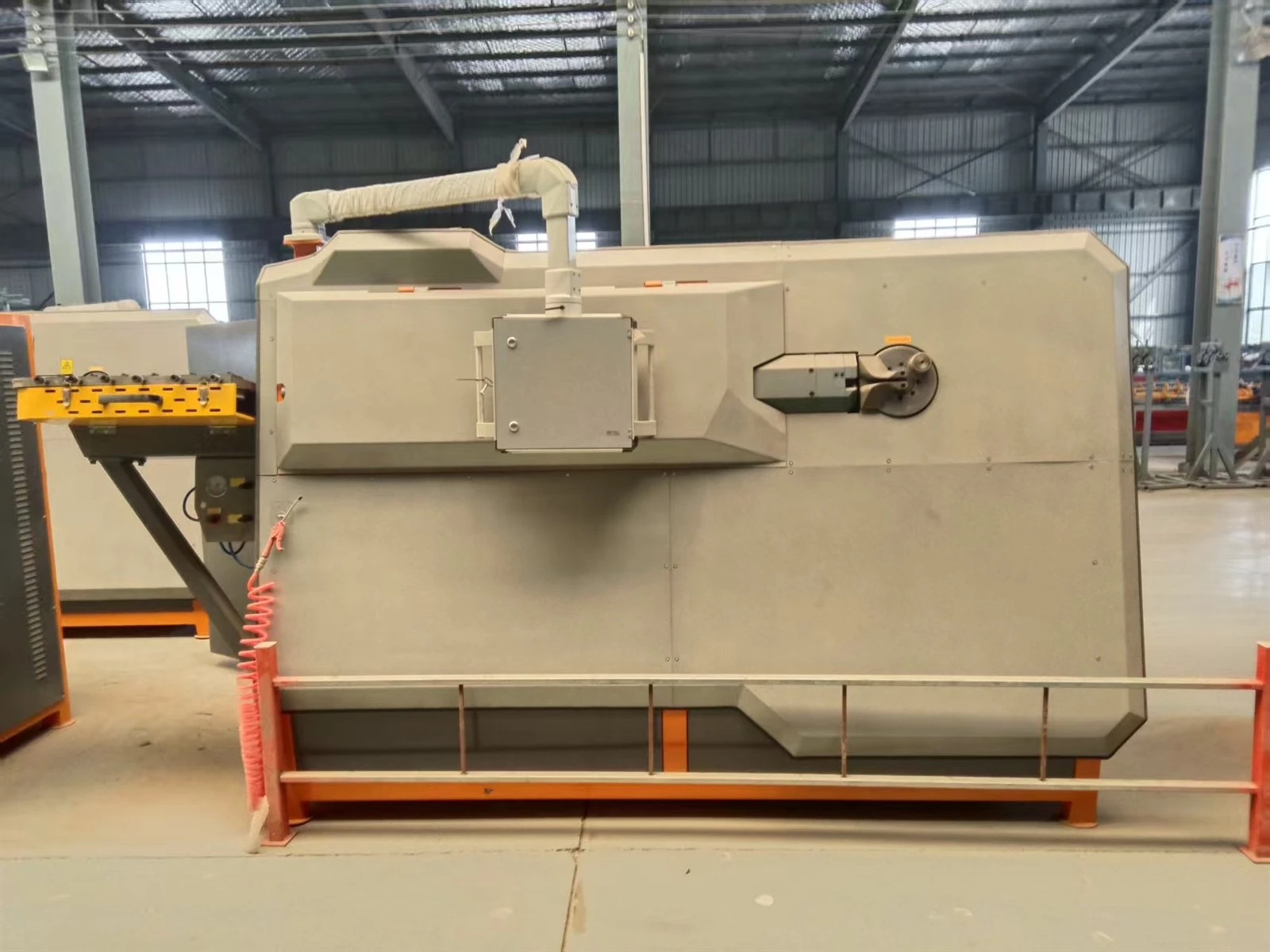
The steel bar bending and coiling machine is a type of specialized equipment dedicated to processing small formed parts such as steel bar hoops and hooks. Through the coordination of mechanical transmission and numerical control systems, it enables the automatic bending and forming of steel bars with diameters ranging from φ4 to 32mm. It is mainly used for producing hoops in beams, columns, slabs, and other structural components in buildings. Compared with traditional manual hoop bending (which relies on tools such as wrenches and manual benders), it completely overcomes the issues of low efficiency, poor precision, and high labor intensity.
Core Technologies and Performance Advantages
Technical Architecture Features
The core structure of the equipment consists of four main units: the straightening system, bending mechanism, control system, and shearing module. Different models vary in configuration according to their level.
High-end CNC model:
Equipped with horizontal and vertical double straightening wheel sets and four sets of traction wheels, it is driven by imported servo motors for both straightening and bending operations. The bending arm can rotate and extend at high speed, and together with the shearing mechanism, it achieves integrated processing of straightening – fixed length – hoop bending – cutting.
The control system supports graphic programming for up to 60 bends, can store tens of thousands of product shapes, and allows continuous production of stirrups of different specifications without mechanical adjustments.
Core Performance Highlights
Efficiency breakthrough:
The basic model can process 500–600 stirrups per hour, bending 10–14mm steel bars four to five times faster than manual labor. The high-end CNC model offers even greater productivity. In one prefabricated building project, it completed the processing of 2,000 φ8mm stirrups in a single 8-hour shift-eight times the efficiency of a manual team.
Controllable precision:
The CNC model achieves a bending angle error of ±1° and a length error of ±2mm through servo positioning. The basic model also maintains an angle accuracy of ±3°, meeting the requirements of the Code for Acceptance of Construction Quality of Concrete Structures. The double straightening wheel system can control the straightness error of the steel bars within ≤1mm per meter, ensuring dimensional consistency of the formed stirrups.
Ease of operation:
The equipment generally features a graphical operation interface. Basic operation training can be completed within 10 minutes, enabling operators to begin work without specialized professional training.