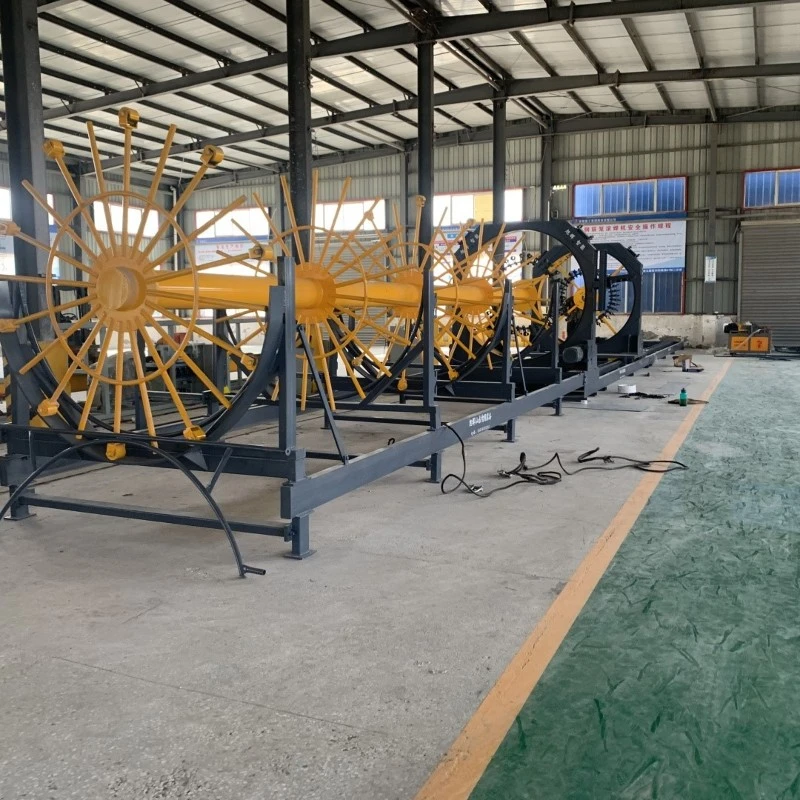
As an automated steel bar processing machine, the steel cage roll welding machine features a precise structure and coordinated functions. It mainly consists of the following core components:
Numerical Control System: This is the "brain" of the equipment. By programming and setting parameters such as the diameter, length, and spacing of the steel bars in the steel cage, it precisely controls the operation of each component, regulates the automated production process, and ensures that the processing accuracy meets engineering standards.
Main Reinforcement Feeding Mechanism: This mechanism is responsible for smoothly conveying the main reinforcement (longitudinal force-bearing reinforcement) to the processing area at the set position. Using the positioning device, it ensures the uniform distribution of the main reinforcement in the circumferential direction, laying the foundation for subsequent welding.
Stirrup Layout and Feeding Mechanism: This mechanism is used to place the stirrup coil material and convey it in an orderly manner to the welding position. It can automatically adjust the feeding speed according to the spacing of the main bars to ensure that the density and angle of the stirrup winding are precise and error-free.
Welding System: This includes components such as the welding machine head and welding torch. Under the control of the numerical control system, it automatically welds the intersection points of the main ribs and stirrups. During the welding process, parameters such as current and voltage can be adjusted in real time to ensure that the weld points are firm and reliable.
Rotary Drive Mechanism: Composed of a motor, reducer, etc., it drives the steel cage frame to rotate at a constant speed, enabling the stirrups to be evenly wound around the outside of the main bars. At the same time, it works with the welding system to complete the full-circle welding operation.
Frame and Support Structure of the Machine Body: Constructed with high-strength steel, this provides a stable foundation for each component, ensuring the rigidity and stability of the equipment during high-speed operation and preventing vibrations that could affect processing accuracy.
Auxiliary Devices: These include guide wheels, straightening mechanisms, and finished product output roller conveyors. They are used for straightening the main bars, guiding and conveying the steel cages after formation, and transferring finished products, thereby enhancing production efficiency.