

In the modern manufacturing industry, CNC steel bar rolling machines have emerged as indispensable tools, especially in sectors such as construction, automotive, and machinery manufacturing. As a reputable supplier of CNC Steel Bar Rolling Machines, I am often asked about the various components and their functions within these sophisticated machines. One critical aspect that deserves in - depth exploration is the communication interface. This blog post aims to shed light on the functions of the communication interface in a CNC steel bar rolling machine.
1. Remote Monitoring and Control
One of the primary functions of the communication interface in a CNC steel bar rolling machine is to enable remote monitoring and control. In today's globalized world, manufacturers may have multiple production sites spread across different geographical locations. With a reliable communication interface, operators can monitor the real - time status of the CNC steel bar rolling machine from anywhere in the world.
For example, through a secure network connection, an engineer sitting in an office can check the current operating parameters of the machine, such as the speed of the rolling process, the temperature of the cutting tools, and the remaining stock of steel bars. If any abnormal conditions are detected, the engineer can immediately take corrective actions, such as adjusting the machine settings or scheduling maintenance.
This remote monitoring and control capability not only improves the efficiency of production management but also reduces the need for on - site personnel. It allows manufacturers to respond quickly to potential problems, minimizing downtime and increasing overall productivity.
2. Data Transfer and Sharing
The communication interface serves as a bridge for data transfer and sharing between the CNC steel bar rolling machine and other systems. In a modern manufacturing environment, the CNC machine is often part of a larger production network that includes other machines, quality control systems, and enterprise resource planning (ERP) software.
The machine can transfer production data, such as the number of steel bars produced, the quality inspection results, and the production time, to the ERP system. This data can be used for production planning, inventory management, and cost analysis. On the other hand, the ERP system can send production orders and instructions to the CNC machine, ensuring that the production process is aligned with the overall business strategy.
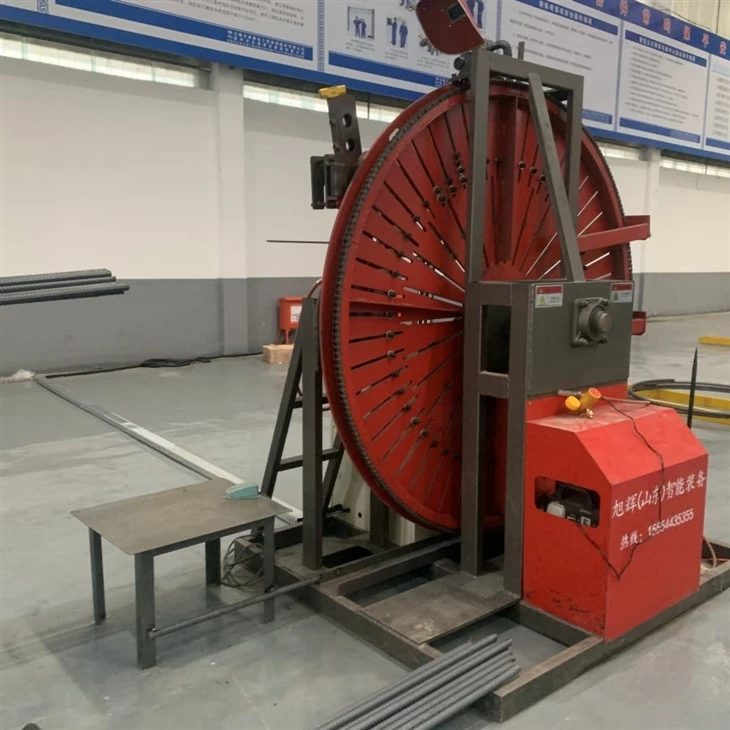

Moreover, the communication interface can also facilitate data sharing between different CNC machines. For instance, if one machine encounters a problem with a particular type of steel bar, it can share the relevant data with other machines in the network. This way, other machines can adjust their settings in advance to avoid similar problems, improving the overall quality and consistency of the production.
3. Software Updates and Maintenance
In the rapidly evolving field of CNC technology, software updates are crucial for improving the performance and functionality of the machine. The communication interface allows for seamless software updates to be delivered to the CNC steel bar rolling machine.
Manufacturers can develop new software versions that optimize the machine's algorithms, add new features, or fix existing bugs. Through the communication interface, these updates can be automatically downloaded and installed on the machine without the need for manual intervention. This ensures that the machine is always running on the latest software, providing the best possible performance.
In addition to software updates, the communication interface also plays an important role in remote maintenance. Service technicians can connect to the machine remotely via the communication interface to diagnose problems, perform system checks, and even carry out software - based repairs. This reduces the time and cost associated with on - site maintenance, as many issues can be resolved without the need for a technician to travel to the production site.
4. Integration with Automation Systems
As the manufacturing industry moves towards greater automation, the CNC steel bar rolling machine needs to be integrated with other automation systems. The communication interface enables this integration by providing a standardized way for the machine to communicate with robots, conveyors, and other automated equipment.
For example, in a fully automated production line, the CNC steel bar rolling machine can communicate with a robotic arm through the communication interface. The machine can send signals to the robotic arm to pick up the finished steel bars and place them on the conveyor belt for further processing. This seamless integration between different automation systems improves the overall efficiency and accuracy of the production process.
It also allows for the implementation of complex manufacturing processes, such as just - in - time production. The CNC machine can coordinate with other systems in the production line to ensure that the right amount of steel bars is produced at the right time, reducing inventory costs and improving customer satisfaction.
5. Compatibility and Standardization
The communication interface in a CNC steel bar rolling machine is designed to be compatible with various communication protocols and standards. This compatibility ensures that the machine can communicate effectively with different types of equipment and systems in the production environment.
For example, many modern CNC machines support Ethernet - based communication protocols, such as TCP/IP. This allows them to be easily integrated into existing local area networks (LANs) or wide area networks (WANs). Additionally, the machine may also support industrial communication protocols, such as Profibus or Modbus, which are commonly used in industrial automation systems.
By adhering to these standards, the CNC steel bar rolling machine can be more easily integrated into different production environments, regardless of the specific equipment and systems used. This flexibility makes it a more attractive option for manufacturers who are looking to upgrade their existing production lines or implement new automation solutions.
Conclusion
In conclusion, the communication interface in a CNC steel bar rolling machine plays a vital role in modern manufacturing. It enables remote monitoring and control, data transfer and sharing, software updates and maintenance, integration with automation systems, and ensures compatibility and standardization. As a supplier of CNC Steel Bar Rolling Machines, we understand the importance of a reliable communication interface in delivering high - performance machines to our customers.
If you are interested in our Fully Automatic Steel Bar Bending Machine, Steel Structure Steel Bar Bending Equipment, or Fully Automatic Steel Bar Circle Forming Machine, or if you have any questions about the communication interface or other aspects of our CNC steel bar rolling machines, please feel free to contact us for further discussion and potential procurement. We are committed to providing you with the best solutions to meet your manufacturing needs.
References
- "CNC Machining Handbook", John Doe, 2020
- "Industrial Communication Protocols in Manufacturing", Jane Smith, 2019
- "Automation in the Steel Bar Manufacturing Industry", Robert Brown, 2021