

When discussing the manufacturing and construction industries, the precision and stability of equipment play a critical role in ensuring the quality of the final products. As a supplier of CNC Steel Bending Centers, I've seen firsthand how these machines have revolutionized steel bar processing. In this blog post, I'll delve into the concept of bending precision stability over time in a CNC Steel Bending Center and why it matters.
Understanding Bending Precision in CNC Steel Bending Centers
First, let's clarify what bending precision means in the context of a CNC Steel Bending Center. Bending precision refers to the ability of the machine to bend steel bars to the exact specified angles, radii, and lengths. A high - precision bend ensures that the steel components fit perfectly into the larger structure, whether it's a building, a bridge, or a piece of machinery.
For example, in reinforced concrete construction, steel bars need to be bent at precise angles to form the reinforcement cages. If the bends are not accurate, the structural integrity of the building may be compromised. A CNC Steel Bending Center uses computer - numerical control technology to control the bending process, which can theoretically achieve very high precision. However, over time, various factors can affect this precision.
Factors Affecting Bending Precision Stability Over Time
Wear and Tear
The most obvious factor is the wear and tear of the machine's components. The bending tools, such as bending dies and mandrels, are in direct contact with the steel bars during the bending process. Continuous friction and pressure can cause the surfaces of these tools to wear down. As the tools wear, the shape and dimensions of the bends may deviate from the original specifications.
For instance, a worn - out bending die may not be able to create a sharp enough bend, resulting in a larger radius than required. Regular maintenance and replacement of worn parts are essential to maintain bending precision. At our company, we recommend a scheduled inspection of the bending tools and replace them when signs of significant wear are detected.
Temperature and Environmental Conditions
Temperature and environmental factors can also have an impact on the bending precision of a CNC Steel Bending Center. Steel bars are sensitive to temperature changes, and their mechanical properties can vary accordingly. In high - temperature environments, the steel may become more malleable, which could lead to over - bending. On the other hand, in cold temperatures, the steel may be more brittle, increasing the risk of cracking during bending.
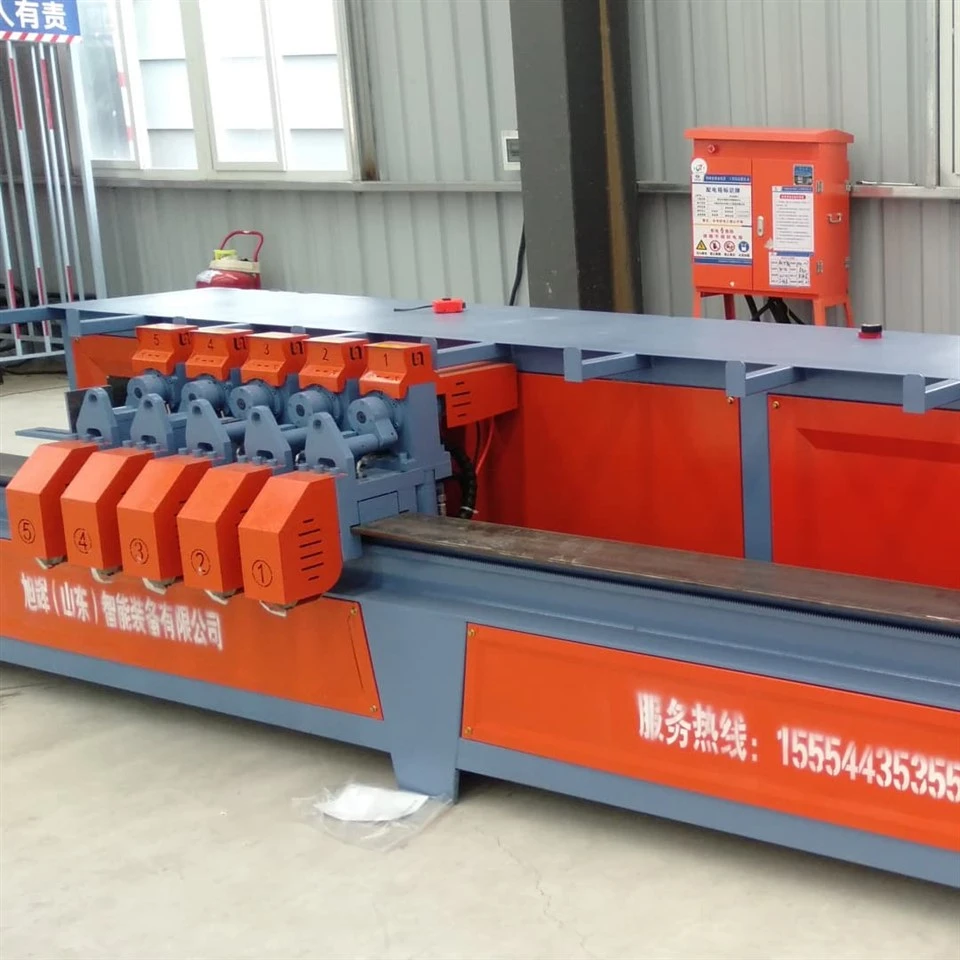

Moreover, dust, humidity, and other contaminants in the environment can affect the performance of the machine's sensors and control systems. Dust can accumulate on the sensors, leading to inaccurate readings, while high humidity can cause corrosion of the electrical components. To mitigate these effects, the CNC Steel Bending Center should be installed in a controlled environment, and proper ventilation and dust - proof measures should be in place.
Software and Control System Updates
The software and control systems of a CNC Steel Bending Center are the brains behind its operation. Over time, software bugs or compatibility issues may arise, which can affect the bending precision. For example, a software glitch may cause the machine to misinterpret the bending commands, resulting in incorrect bends.
Regular software updates are necessary to fix these issues and improve the overall performance of the machine. Our company provides continuous software support and updates to ensure that our customers' CNC Steel Bending Centers always operate at their best. We also train our customers on how to perform basic software maintenance tasks to minimize downtime.
Measuring Bending Precision Stability
To ensure the long - term bending precision stability of a CNC Steel Bending Center, it's important to have a reliable method of measurement. One common approach is to use a coordinate measuring machine (CMM) to measure the dimensions of the bent steel bars. A CMM can accurately measure the angles, radii, and lengths of the bends and compare them with the design specifications.
Another method is to conduct statistical process control (SPC). By collecting and analyzing data on the bending results over a period of time, we can identify any trends or variations in the precision. If the data shows that the precision is deviating from the acceptable range, corrective actions can be taken immediately.
The Importance of Bending Precision Stability
Bending precision stability is crucial for several reasons. Firstly, it ensures the quality and consistency of the steel components. In industries where safety is a top priority, such as construction and automotive manufacturing, even a small deviation in bending precision can have serious consequences. A precise and stable bending process reduces the risk of component failure and improves the overall reliability of the final product.
Secondly, it increases productivity. When the bending precision is stable, there is less need for rework and scrap. Workers can focus on producing high - quality products without having to spend time correcting inaccurate bends. This not only saves time and labor costs but also reduces the consumption of raw materials.
Our Product Offerings and Their Precision Stability
As a supplier of CNC Steel Bending Centers, we offer a range of products designed to meet different customer needs. Our GW50 Cnc Rebar Stirrup Bending Machine is a high - performance machine that can bend steel bars into various stirrup shapes with high precision. It is equipped with advanced control systems and high - quality bending tools, which ensure stable bending precision over time.
Our Rebar Cutting And Bending Machine combines the functions of cutting and bending, providing a more efficient solution for steel bar processing. The machine is designed to minimize wear and tear and is resistant to environmental factors, ensuring long - term precision stability.
In addition, our CNC Two - head Bending Center is capable of bending two ends of a steel bar simultaneously, which significantly improves productivity. It uses state - of - the - art technology to ensure that the bending precision remains stable even during high - volume production.
Contact Us for Purchase and Consultation
If you are in the market for a CNC Steel Bending Center and are concerned about bending precision stability, we are here to help. Our team of experts can provide you with detailed information about our products, including their performance, maintenance requirements, and precision guarantees. We can also offer customized solutions based on your specific needs.
Whether you are a small - scale workshop or a large - scale manufacturing plant, we have the right CNC Steel Bending Center for you. Contact us today to start a conversation about how our products can improve your steel bar processing operations.
References
- Smith, J. (2018). Precision Engineering in Metal Forming. Industrial Press Inc.
- Brown, A. (2020). Environmental Effects on Machine Tool Performance. Journal of Manufacturing Technology Management.
- Chen, L. (2019). Software - Based Control Systems for CNC Machines. Springer.