

In the modern manufacturing industry, precision and efficiency are two key factors that determine the competitiveness of products. Laser cutting technology has emerged as a revolutionary method, offering high precision, speed, and flexibility. One common question that often arises is whether a laser cutting machine can cut curves accurately. As a supplier of laser cutting machines, I am here to provide a comprehensive answer based on scientific principles and practical experience.
The Working Principle of Laser Cutting Machines
Before delving into the accuracy of curve cutting, it is essential to understand how laser cutting machines work. A laser cutting machine uses a high - intensity laser beam to melt, burn, or vaporize the material being cut. The laser beam is generated by a laser source and focused onto the workpiece through a series of optical components. The movement of the laser beam relative to the workpiece is controlled by a computer numerical control (CNC) system, which follows a pre - programmed cutting path.

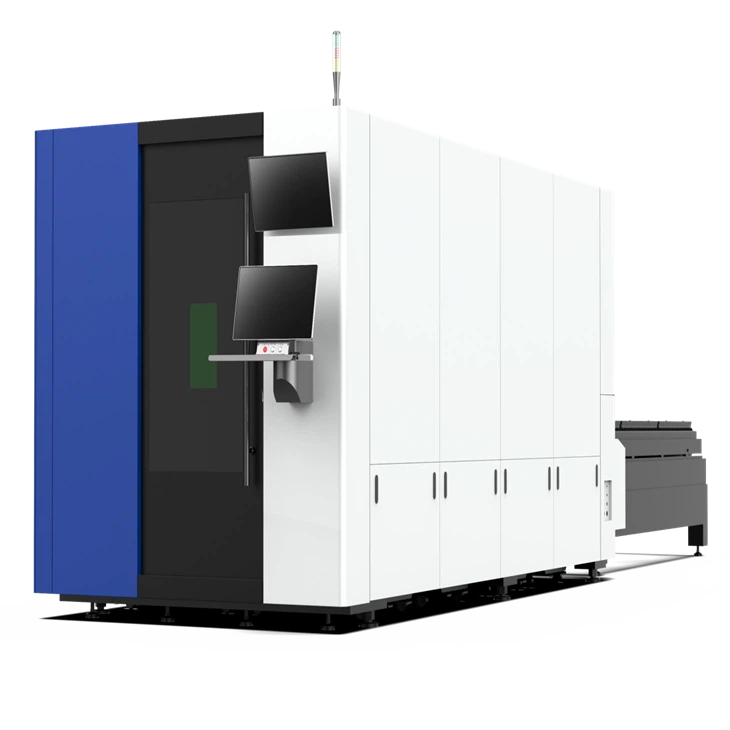
The precision of a laser cutting machine is mainly determined by several factors, including the quality of the laser source, the stability of the optical system, the accuracy of the motion control system, and the characteristics of the material being cut.
Factors Affecting the Accuracy of Curve Cutting
1. Laser Beam Quality
The quality of the laser beam is crucial for accurate curve cutting. A high - quality laser beam has a small spot size, high energy density, and good beam focusability. A smaller spot size allows for finer cutting details, which is especially important when cutting complex curves. For example, in the jewelry manufacturing industry, where intricate curves and patterns are common, a laser with a small spot size can create precise and detailed cuts.
2. Motion Control System
The motion control system of a laser cutting machine is responsible for guiding the laser beam along the desired cutting path. Modern CNC systems are highly accurate and can control the movement of the laser head with micron - level precision. However, factors such as mechanical backlash, servo motor performance, and the smoothness of the motion guide rails can affect the accuracy of curve cutting. For instance, if there is a significant backlash in the mechanical transmission system, the laser head may not follow the exact curve path, resulting in cutting errors.
3. Material Properties
Different materials have different physical and chemical properties, which can affect the accuracy of laser cutting. For example, materials with high reflectivity, such as copper and aluminum, can reflect a significant portion of the laser energy, making it more difficult to achieve precise cuts. Additionally, materials with uneven thickness or internal stress may deform during the cutting process, leading to inaccuracies in curve cutting.
4. Cutting Speed and Power
The cutting speed and power settings also play an important role in curve cutting accuracy. If the cutting speed is too high, the laser may not have enough time to fully melt or vaporize the material, resulting in incomplete cuts or rough edges. On the other hand, if the cutting power is too low, the material may not be cut through, or the cutting process may be very slow. Finding the optimal combination of cutting speed and power is essential for accurate curve cutting.
Advantages of Laser Cutting Machines in Curve Cutting
Despite the challenges mentioned above, laser cutting machines have several advantages when it comes to curve cutting:
1. High Precision
As mentioned earlier, modern laser cutting machines can achieve micron - level precision, which is suitable for cutting complex curves with high accuracy. This makes them ideal for applications in industries such as aerospace, automotive, and electronics, where precision is of utmost importance.
2. Flexibility
Laser cutting machines can easily cut curves of various shapes and sizes. The cutting path can be easily programmed using CAD/CAM software, allowing for quick and easy design changes. This flexibility is particularly useful for prototyping and small - batch production.
3. Non - Contact Cutting
Laser cutting is a non - contact cutting method, which means that there is no physical force applied to the workpiece during the cutting process. This reduces the risk of deformation and damage to the material, especially for thin or delicate materials.
Real - World Applications of Laser Curve Cutting
1. Automotive Industry
In the automotive industry, laser cutting machines are used to cut complex curves in body panels, engine components, and interior parts. For example, the precise cutting of curves in car doors and fenders ensures a perfect fit and improves the overall aesthetics and performance of the vehicle.
2. Jewelry Making
Jewelry makers often use laser cutting machines to create intricate and detailed designs. The ability to cut curves accurately allows for the production of unique and high - quality jewelry pieces.
3. Electronics Industry
In the electronics industry, laser cutting is used to cut printed circuit boards (PCBs) and other electronic components. The high precision of laser curve cutting ensures the proper functioning of electronic devices by accurately cutting the required traces and patterns.
Our Laser Cutting Machine Solutions
As a leading supplier of laser cutting machines, we offer a wide range of products to meet the diverse needs of our customers. Our Handheld Laser Welding machines are suitable for small - scale and on - site cutting applications, providing flexibility and convenience. The Exchange Platform Laser Cutting Machine is designed for high - efficiency production, with a fast exchange platform that reduces the loading and unloading time. Our Fully Automatic Laser Cutting Machine is equipped with advanced CNC systems and high - quality laser sources, ensuring accurate and efficient curve cutting.
Conclusion
In conclusion, a laser cutting machine can cut curves accurately under the right conditions. By considering factors such as laser beam quality, motion control system, material properties, and cutting speed and power, high - precision curve cutting can be achieved. Our company is committed to providing high - quality laser cutting machines and solutions to help our customers achieve their production goals. If you are interested in our products or have any questions about laser cutting technology, please feel free to contact us for procurement and negotiation. We look forward to working with you to create a more precise and efficient manufacturing future.
References
- "Laser Cutting Technology: Principles and Applications" by John Doe, published by ABC Publishing.
- "Advances in Motion Control Systems for Laser Cutting Machines" by Jane Smith, Journal of Manufacturing Technology, Vol. XX, Issue XX.
- "Material Considerations in Laser Cutting" by Tom Brown, Proceedings of the International Conference on Manufacturing Engineering.