


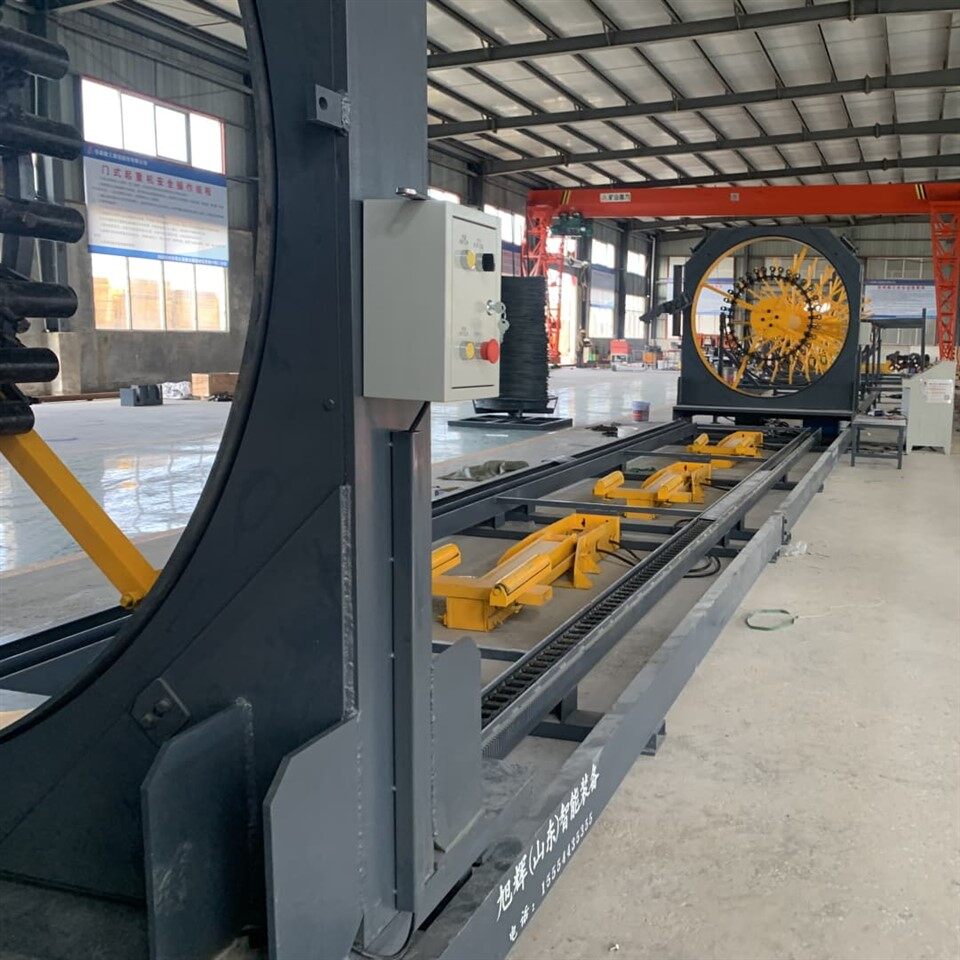
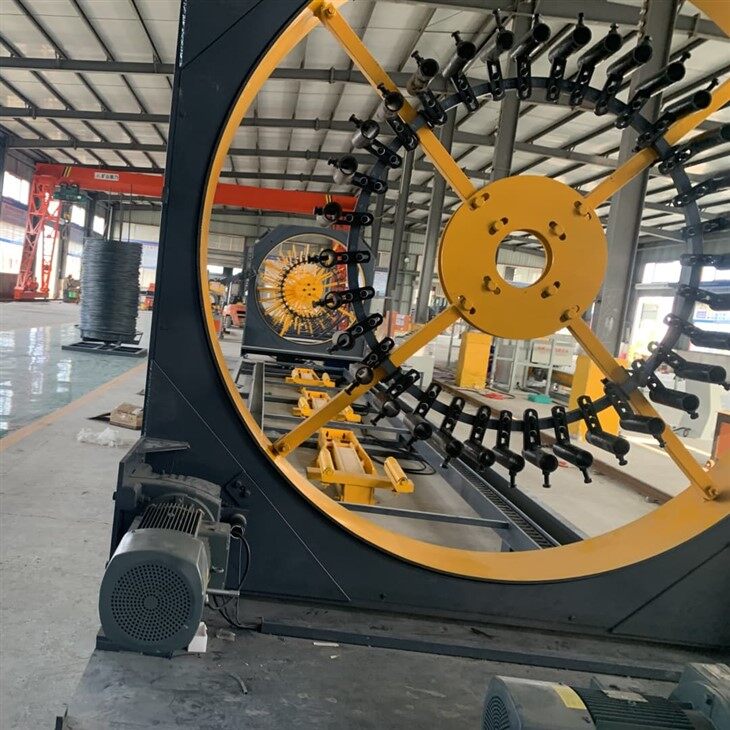
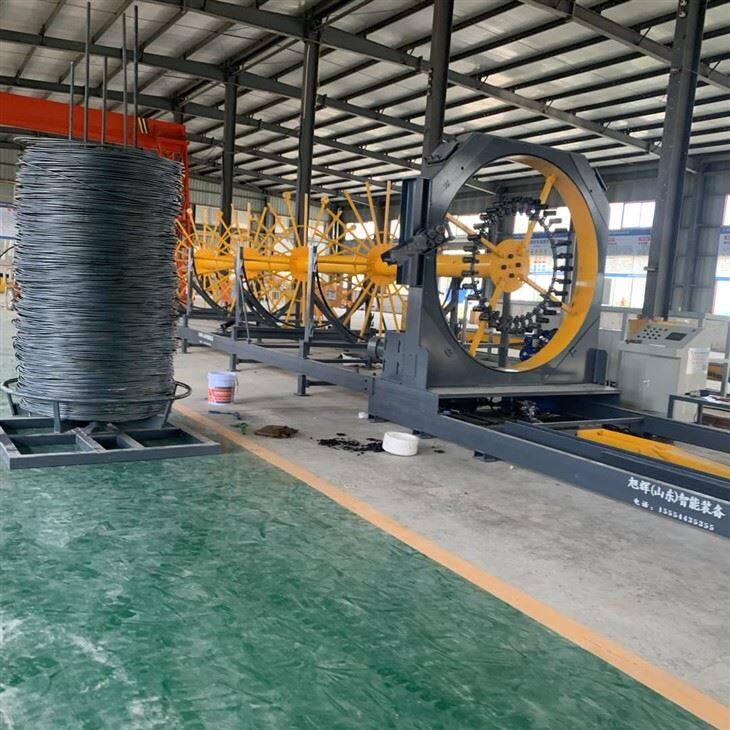
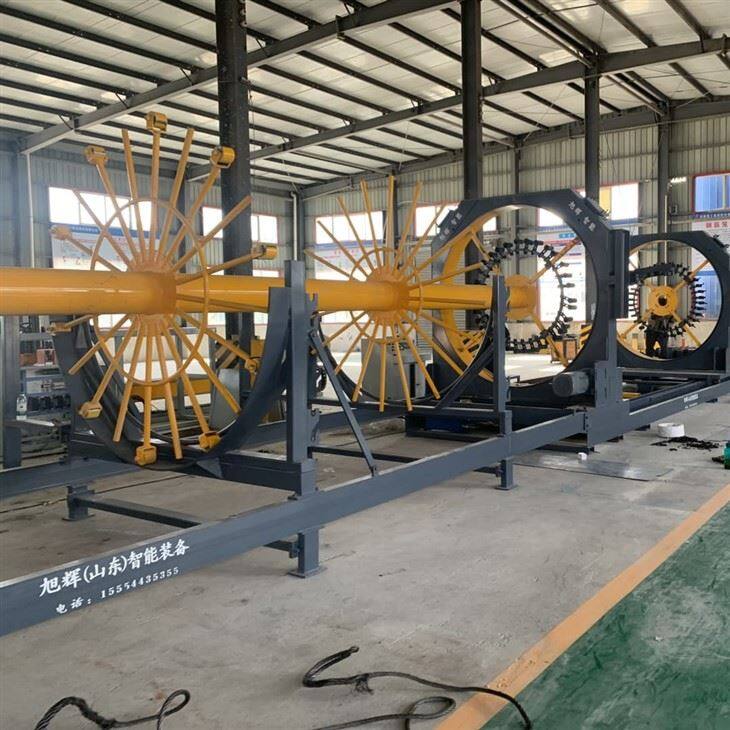
Xuhui (Shandong) Intelligent Equipment Co., Ltd. is one of the leading manufacturers and suppliers of pouring steel cage roll welding machine in China. If you're going to wholesale high quality pouring steel cage roll welding machine made in China, welcome to get quotation from our factory. Customized orders are welcome.
The CNC rebar cage rolling welding machine is an intelligent rebar processing device that integrates mechanical, electrical, and hydraulic systems. It is mainly used in construction projects to achieve automated production of rebar cages in various specifications. With its built-in digital control system, it can precisely form and weld rebar cages, not only boosting production efficiency but also ensuring more reliable product quality.
Production Process Flow
Main bar positioning
1
>>
Starter hoop fixation
2
>>
Winding and welding
3
>>
Forming and unloading
4
Products Display


Performance Advantages


- High Processing Accuracy: The machine can control the diameter deviation of rebar cages within ±1 mm, ensuring precise dimensions that fully meet construction accuracy requirements.
- Extremely Stable Quality: Automated welding ensures a welding pass rate far higher than traditional methods, providing more reliable quality and reducing the need for rework.
- High Production Efficiency: Fast output, with a daily processed linear length of rebar cages reaching up to 150 meters, greatly accelerating overall construction progress.
- Energy-Saving and Environmentally Friendly: Lower energy consumption during operation, effectively reducing construction costs while meeting modern environmental standards.
Application fields
Infrastructure Construction: Widely used for rebar cage fabrication in core civil engineering projects such as bridges and tunnels, meeting the essential requirements of various infrastructure constructions.
New Energy Projects: Accurately fabricates rebar cages of all specifications for renewable energy facilities, including wind farms and nuclear power plants.
Building Construction: Specifically designed for producing rebar cages for various prefabricated building components, aligning with the standardization and large-scale production requirements of prefabricated construction.
Major Engineering Projects: Efficiently meets the large-scale, high-precision rebar cage production needs of key projects such as high-speed railways, airports, and large stadiums.

Product Operation Introduction
- Preparatory work
Before powering on, ensure the voltage is stable, the cable insulation is intact, and the grounding protection is functioning properly to avoid electrical issues.
Inspect the mechanical parts of the equipment: the rollers should rotate smoothly, the gearbox should run without abnormal noise, and the welding wheels' surfaces should be flat and free of dents or damage.
Keep the operation area clean, free of debris, and leave at least 1.5 meters of working space for safe and convenient operation.
- Accurate Parameter Settings
Adjust the welding current according to the rebar thickness. Perform a trial weld first and make minor adjustments to achieve optimal weld quality.
Set the roller rotation speed based on rebar diameter: the thicker the rebar, the slower the speed, ensuring stable processing.
Do not weld for too long in a single pass to prevent overheating or deformation, which could affect the final product quality.
- Rebar Feeding and Positioning
Feed the rebar steadily by hand, ensuring both ends protrude equally from the rollers, and secure their positions with positioning clamps to prevent deviation during rolling.
Do not hold the rebar with one hand during feeding to avoid injury from rotating components; always prioritize operational safety.
- Real-Time Welding Monitoring
Continuously observe the welds to ensure they are uniform, continuous, and free of pores or incomplete fusion.
If any weld defects are detected, stop the machine and check the alignment between the rebar and rollers; adjust if necessary.
If abnormal sparks occur during welding, immediately stop the machine and inspect the electrodes and current settings.
In short, the emergence and widespread use of CNC rebar cage rolling and welding machines have not only improved construction efficiency and quality but also reduced construction costs and labor intensity, providing strong support for engineering projects.


