

As a supplier of CNC Steel Bar Sawing Machines, I understand the critical importance of cutting quality in the metal processing industry. High - quality cutting not only ensures the accuracy of the final product but also enhances production efficiency and reduces waste. In this blog, I will share some effective ways to improve the cutting quality of a CNC steel bar sawing machine.
1. Choose the Right Saw Blade
The saw blade is the most crucial component that directly affects the cutting quality. Different saw blades are designed for different materials and cutting requirements. When selecting a saw blade for a CNC steel bar sawing machine, several factors need to be considered.
- Tooth Geometry: The tooth geometry of the saw blade determines its cutting ability. For example, a finer tooth pitch is suitable for cutting thin - walled steel bars or materials that require a smooth finish. On the other hand, a coarser tooth pitch is more appropriate for cutting thick - walled or hard - to - cut materials, as it can remove more material per tooth.
- Material of the Saw Blade: High - speed steel (HSS) saw blades are commonly used for general - purpose cutting of steel bars. They offer good durability and cutting performance at a relatively low cost. However, for more demanding applications, such as cutting high - strength alloys, carbide - tipped saw blades are a better choice. Carbide - tipped saw blades have higher hardness and wear resistance, which can significantly improve the cutting quality and the service life of the saw blade.
We offer a wide range of saw blades suitable for different CNC steel bar sawing machines. Our experts can help you choose the most appropriate saw blade for your specific cutting needs. You can explore our Steel Bar Cutting Sawing Machine Equipment page to find more information about the compatible saw blades.
2. Optimize Cutting Parameters
Proper cutting parameters are essential for achieving high - quality cuts. The main cutting parameters include cutting speed, feed rate, and cutting depth.

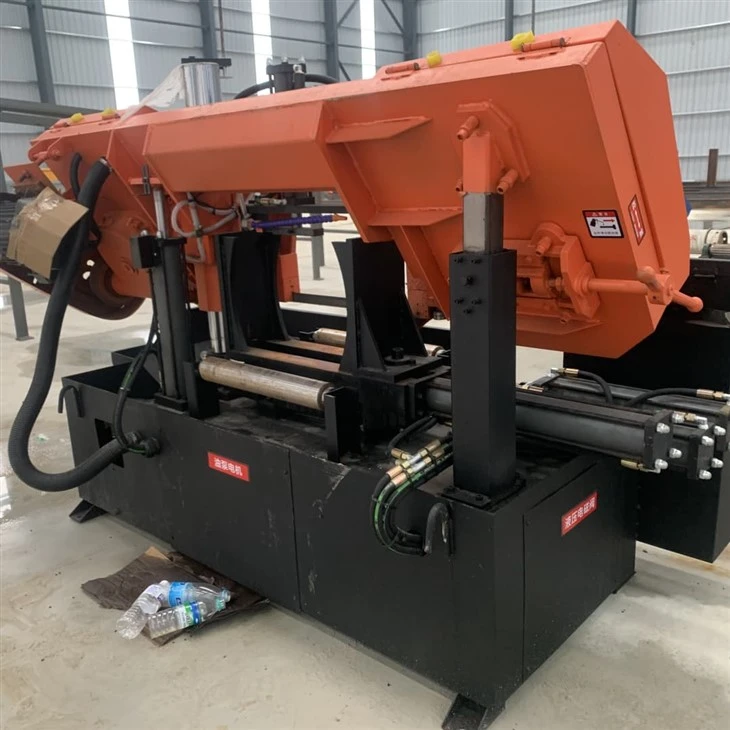
- Cutting Speed: The cutting speed is the speed at which the saw blade rotates. It should be adjusted according to the material being cut, the diameter of the steel bar, and the type of saw blade. A too - high cutting speed can cause the saw blade to overheat, leading to premature wear and a poor - quality cut. Conversely, a too - low cutting speed can result in inefficient cutting and rough surfaces.
- Feed Rate: The feed rate is the speed at which the steel bar is fed into the saw blade. It should be coordinated with the cutting speed to ensure a smooth and efficient cutting process. A proper feed rate can prevent the saw blade from stalling or breaking and can also improve the surface finish of the cut.
- Cutting Depth: The cutting depth refers to the thickness of the material that the saw blade can cut in one pass. It should be determined based on the saw blade's capacity and the material's properties. A too - large cutting depth can put excessive stress on the saw blade, while a too - small cutting depth may lead to multiple passes and longer cutting times.
Our CNC steel bar sawing machines are equipped with advanced control systems that allow for precise adjustment of cutting parameters. By optimizing these parameters, you can significantly improve the cutting quality and productivity.
3. Ensure Proper Machine Maintenance
Regular maintenance of the CNC steel bar sawing machine is crucial for maintaining its cutting quality.
- Lubrication: Proper lubrication of the saw blade and the machine's moving parts is essential. Lubrication reduces friction, heat generation, and wear, which can improve the cutting performance and extend the service life of the saw blade and the machine. Different types of lubricants are available for different cutting applications, and it is important to use the right lubricant according to the manufacturer's recommendations.
- Cleaning: Keeping the machine clean is also important. Dust, chips, and debris can accumulate on the saw blade and the machine's components, which can affect the cutting quality and cause damage to the machine. Regular cleaning of the saw blade, the worktable, and the chip conveyor can prevent these problems.
- Calibration: Periodic calibration of the machine is necessary to ensure its accuracy. This includes checking the alignment of the saw blade, the accuracy of the cutting length, and the positioning of the clamping devices. Any misalignment or inaccuracy can lead to poor - quality cuts.
We provide comprehensive maintenance services and training for our customers. Our technicians can help you establish a regular maintenance schedule and teach you how to perform basic maintenance tasks to keep your machine in optimal condition.
4. Improve Workpiece Clamping
Proper workpiece clamping is essential for stable and accurate cutting. If the steel bar is not clamped firmly, it can move during the cutting process, resulting in uneven cuts, rough surfaces, and even damage to the saw blade.
- Clamping Force: The clamping force should be sufficient to hold the steel bar in place without deforming it. Different types of clamping devices are available, such as hydraulic clamps and mechanical clamps. The choice of clamping device depends on the size and shape of the steel bar and the cutting requirements.
- Clamping Position: The clamping position should be carefully selected to ensure that the steel bar is centered and aligned with the saw blade. This can prevent the saw blade from cutting at an angle and improve the cutting accuracy.
Our CNC steel bar sawing machines are equipped with advanced clamping systems that can provide reliable and precise clamping. These systems can be adjusted to accommodate different sizes and shapes of steel bars, ensuring stable cutting under various conditions.
5. Upgrade to Advanced Machine Models
If you are still using an old - fashioned CNC steel bar sawing machine, upgrading to a more advanced model can significantly improve the cutting quality.
- Advanced Control Systems: Newer models are often equipped with more advanced control systems that offer better precision and flexibility. These control systems can automatically adjust the cutting parameters based on the material and the cutting requirements, ensuring optimal cutting quality.
- Higher - Quality Components: Advanced machines are usually built with higher - quality components, such as more accurate motors, stronger frames, and better - designed saw blade guides. These components can improve the stability and reliability of the machine, leading to better cutting results.
We offer a variety of advanced CNC steel bar sawing machines, such as the Rebar Bundling Sawing System and the Modular CNC Double - column Metal Sawing Machine. These machines are designed to meet the most demanding cutting requirements and can provide excellent cutting quality.
Conclusion
Improving the cutting quality of a CNC steel bar sawing machine requires a comprehensive approach that includes choosing the right saw blade, optimizing cutting parameters, ensuring proper machine maintenance, improving workpiece clamping, and upgrading to advanced machine models. As a professional supplier of CNC steel bar sawing machines, we are committed to providing our customers with high - quality machines, reliable after - sales services, and technical support.
If you are interested in improving the cutting quality of your CNC steel bar sawing machine or are considering purchasing a new machine, please feel free to contact us for more information and a detailed consultation. Our team of experts will be happy to assist you in finding the best solution for your specific needs.
References
- "Metal Cutting Principles" by Peter Oxley.
- "Handbook of Machining with Cutting Tools" by E. Brinksmeier, T. A. Dean, and A. Inasaki.