

Accurately adjusting the bending position in a CNC horizontal bending machine is crucial for achieving high - quality bending results in various metalworking applications. As a supplier of CNC Horizontal Bending Machines, I understand the significance of this process and am here to share some valuable insights on how to accomplish it effectively.
Understanding the Basics of a CNC Horizontal Bending Machine
Before delving into the adjustment of the bending position, it's essential to have a clear understanding of the CNC horizontal bending machine itself. These machines are designed to bend metal bars, rods, or tubes with precision and efficiency. They are equipped with computer - numerical - control (CNC) systems that allow operators to program specific bending angles, lengths, and positions.

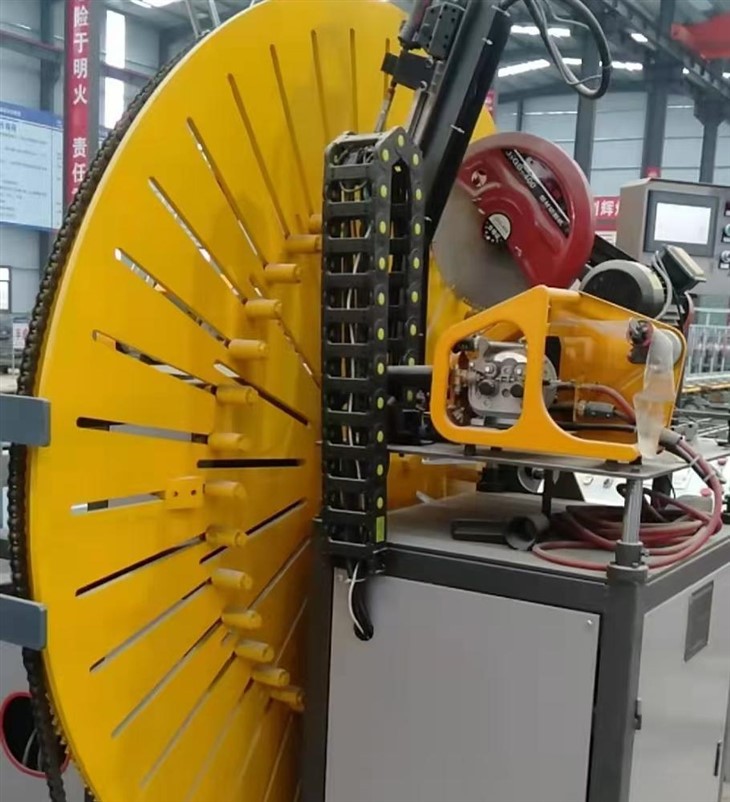
The key components of a CNC horizontal bending machine include the bending die, the clamping device, the feeding system, and the control panel. The bending die is responsible for shaping the metal, the clamping device holds the workpiece in place during bending, the feeding system moves the workpiece through the machine, and the control panel enables operators to input and adjust the bending parameters.
Factors Affecting the Bending Position
Several factors can influence the accuracy of the bending position in a CNC horizontal bending machine. These factors need to be carefully considered and addressed to ensure precise bending.
Material Properties
The type, thickness, and hardness of the material being bent play a significant role in determining the bending position. Different materials have different elastic and plastic deformation characteristics. For example, softer materials may require less force to bend but are more prone to spring - back, which can affect the final bending position. Harder materials, on the other hand, may require higher bending forces and may cause more wear on the bending dies.
Machine Calibration
Proper calibration of the CNC horizontal bending machine is essential for accurate bending. This includes calibrating the position sensors, the feeding system, and the bending dies. Any inaccuracies in the calibration can lead to errors in the bending position. For instance, if the position sensors are not calibrated correctly, the machine may not move the workpiece to the exact position required for bending.
Bending Die Selection
The choice of bending die is also crucial. The size, shape, and radius of the bending die should be selected according to the requirements of the bending task. Using an inappropriate bending die can result in uneven bending, incorrect angles, or damage to the workpiece.
Steps to Adjust the Bending Position Accurately
Step 1: Material Preparation
Before starting the bending process, ensure that the material is clean, straight, and free from any defects. Measure the length and thickness of the material accurately and mark the desired bending points. This will help in setting the correct parameters on the CNC control panel.
Step 2: Machine Setup
- Calibration Check: Perform a thorough calibration check of the machine. This includes checking the accuracy of the position sensors, the feeding system, and the bending dies. Use precision measuring tools such as calipers and micrometers to verify the calibration.
- Bending Die Installation: Select the appropriate bending die based on the material and the bending requirements. Install the bending die correctly on the machine, ensuring that it is securely fastened and aligned.
Step 3: Parameter Input on the CNC Control Panel
- Bending Angle and Length: Input the desired bending angle and length into the CNC control panel. The control panel will use these parameters to calculate the necessary movements of the feeding system and the bending die.
- Positioning: Set the starting position of the workpiece on the machine. This can be done by adjusting the feeding system or by using the position sensors on the machine.
Step 4: Test Bending
Before bending a large batch of workpieces, perform a test bending on a sample piece. This will allow you to verify the accuracy of the bending position and make any necessary adjustments. Measure the bending angle and position of the test piece using precision measuring tools. If there are any deviations from the desired values, adjust the parameters on the CNC control panel accordingly.
Step 5: Continuous Monitoring and Adjustment
During the bending process, continuously monitor the bending position. Use sensors or visual inspection to check if the workpiece is being bent at the correct position. If any errors are detected, stop the machine immediately and make the necessary adjustments. This may involve adjusting the feeding speed, the bending force, or the position of the bending die.
Advanced Techniques for Precise Bending Position Adjustment
Using Laser Positioning Systems
Laser positioning systems can be used to enhance the accuracy of the bending position. These systems project a laser beam onto the workpiece, allowing operators to precisely align the workpiece with the bending die. Laser positioning systems can also be integrated with the CNC control panel, providing real - time feedback on the position of the workpiece.
Employing Simulation Software
Simulation software can be used to predict the bending process and optimize the bending parameters. By inputting the material properties, the bending angle, and the length of the workpiece into the simulation software, operators can simulate the bending process and identify any potential issues before starting the actual bending. This can help in reducing the number of test bends and improving the overall accuracy of the bending position.
Our Product Range
As a leading supplier of CNC Horizontal Bending Machines, we offer a wide range of high - quality machines to meet the diverse needs of our customers. Our product range includes the Multi - functional Integrated Steel Bar Bending Machine, which is capable of performing multiple bending operations on steel bars with high precision. We also provide the Steel Bar Ring Bending Machine for bending steel bars into rings, and the Fully Automatic Steel Bar Circle Forming Machine for forming steel bars into circles automatically.
Conclusion
Accurately adjusting the bending position in a CNC horizontal bending machine is a complex but essential process. By understanding the factors affecting the bending position, following the steps for adjustment, and employing advanced techniques, you can achieve high - precision bending results. If you are in the market for a CNC Horizontal Bending Machine or need further assistance with bending position adjustment, please feel free to contact us. We are committed to providing you with the best products and services to meet your metalworking needs.
References
- "CNC Machining Handbook" - A comprehensive guide on CNC machining processes and techniques.
- "Metal Forming Technology" - A textbook that covers the principles and applications of metal forming, including bending.
- Industry whitepapers on CNC horizontal bending machines from leading manufacturers.