

In the realm of modern manufacturing, welding is a fundamental process that joins materials together, and the stability of the welding arc is crucial for high - quality welds. As a supplier of intelligent welding robots, we understand the significance of ensuring a stable welding arc and have developed advanced technologies to achieve this goal.
Understanding the Welding Arc
The welding arc is a plasma discharge that occurs between the electrode and the workpiece. It generates intense heat, which melts the base metal and the filler material, creating a weld joint. However, the welding arc is a complex physical phenomenon affected by various factors such as electrical parameters, shielding gas, and the condition of the electrode and workpiece.

Electrical parameters play a vital role in arc stability. The voltage and current settings determine the energy input to the arc. If the voltage is too high, the arc may become unstable and prone to wandering. On the other hand, if the current is too low, the arc may extinguish. Our intelligent welding robots are equipped with advanced power sources that can precisely control the voltage and current. These power sources use sophisticated algorithms to adjust the electrical parameters in real - time based on the welding conditions, ensuring a stable arc throughout the welding process.
Advanced Sensor Technology
One of the key features of our intelligent welding robots is the use of advanced sensor technology. These sensors can monitor various aspects of the welding process, including the arc length, temperature, and the position of the electrode. For example, arc length sensors continuously measure the distance between the electrode and the workpiece. If the arc length deviates from the optimal value, the robot's control system can quickly adjust the position of the electrode to maintain a stable arc.
Temperature sensors are also essential. They can detect the temperature of the weld pool and the surrounding area. High temperatures can cause the arc to become unstable and may lead to defects in the weld. By monitoring the temperature, our robots can adjust the welding speed and energy input to keep the temperature within the optimal range.
In addition, position sensors ensure that the electrode is accurately positioned relative to the workpiece. Any misalignment can disrupt the arc and result in poor - quality welds. Our robots use high - precision position sensors to ensure that the electrode follows the welding path precisely, maintaining a stable arc.
Shielding Gas Management
Shielding gas is another critical factor in arc stability. It protects the weld pool from atmospheric contamination and helps to stabilize the arc. Different types of shielding gases are used depending on the welding process and the materials being welded. For example, argon is commonly used for TIG (Tungsten Inert Gas) welding, while a mixture of argon and carbon dioxide is often used for MIG (Metal Inert Gas) welding.
Our intelligent welding robots are designed to manage the shielding gas flow accurately. They are equipped with gas flow controllers that can adjust the gas flow rate based on the welding conditions. The robots also monitor the gas quality to ensure that it meets the required standards. If there is a problem with the shielding gas, such as a low flow rate or contamination, the robot can alert the operator and take corrective actions.
Adaptive Control Systems
Our intelligent welding robots are equipped with adaptive control systems. These systems can analyze the data collected by the sensors and make real - time adjustments to the welding process. For example, if the sensors detect a change in the material properties of the workpiece, such as a variation in thickness or composition, the adaptive control system can adjust the welding parameters accordingly.
The adaptive control systems also take into account external factors such as vibrations and changes in the environment. In a manufacturing environment, there may be vibrations from other machinery or changes in temperature and humidity. These factors can affect the stability of the welding arc. Our adaptive control systems can compensate for these external factors by adjusting the welding parameters, ensuring a stable arc even in challenging conditions.
Software and Programming
The software that controls our intelligent welding robots is another important aspect of arc stability. Our software is designed to be user - friendly and highly customizable. It allows operators to program the welding process in detail, including the welding path, speed, and electrical parameters.
The software also has built - in safety features. It can detect abnormal conditions in the welding process, such as an unstable arc or a malfunctioning sensor, and automatically stop the welding operation to prevent damage to the robot and the workpiece. In addition, the software can store welding data for future analysis, which helps to improve the welding process and ensure consistent quality.
Product Advantages
Our intelligent welding robots offer several advantages over traditional welding methods. First, they provide higher precision and repeatability. Since the robots can accurately control the welding parameters and follow the welding path precisely, the quality of the welds is more consistent. This is especially important in industries where high - quality welds are required, such as aerospace and automotive manufacturing.
Second, our robots are more efficient. They can work continuously without fatigue, and the real - time adjustment of the welding parameters ensures that the welding process is optimized. This leads to shorter welding times and lower production costs.
Third, our intelligent welding robots are safer. They can operate in hazardous environments, such as high - temperature or high - radiation areas, without putting human operators at risk.
Our Product Range
We offer a wide range of intelligent welding robots to meet the diverse needs of our customers. Our Energy - saving Welding Robot is designed to reduce energy consumption while maintaining high - quality welds. It uses advanced power management technology to optimize the energy input, making it an environmentally friendly and cost - effective solution.
Our New Type Of Intelligent Welding Robot features the latest sensor and control technologies. It offers even higher precision and stability, making it suitable for the most demanding welding applications.
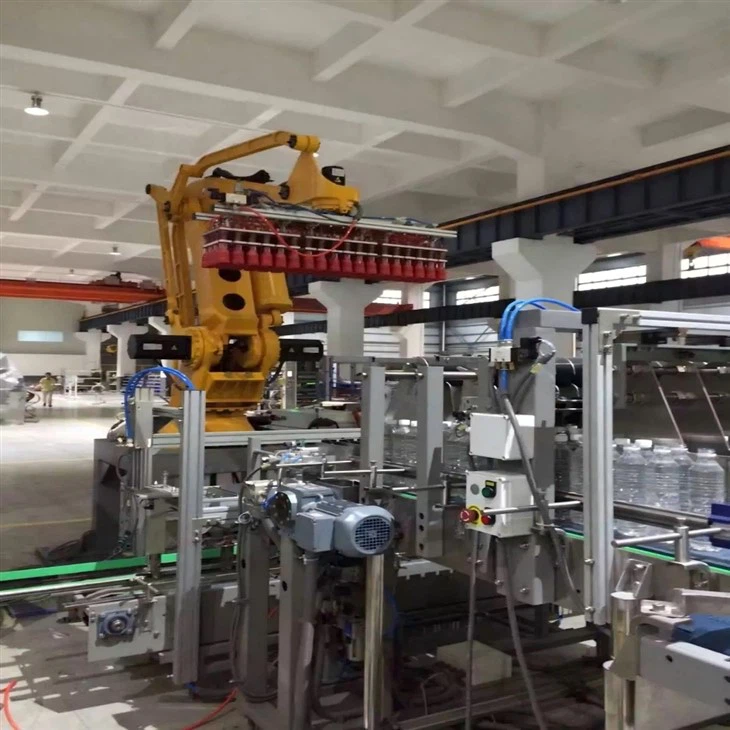
In addition, we also have Intelligent Handling Robot that can work in conjunction with our welding robots. These handling robots can move and position the workpieces accurately, further improving the efficiency and quality of the welding process.
Contact Us for Purchase and Negotiation
If you are interested in our intelligent welding robots and want to learn more about how they can ensure the stability of the welding arc and improve your welding process, we invite you to contact us. Our team of experts is ready to provide you with detailed information and support. We can also arrange on - site demonstrations and offer customized solutions based on your specific requirements. Whether you are a small - scale manufacturer or a large - scale industrial enterprise, our intelligent welding robots can help you achieve higher - quality welds, improve productivity, and reduce costs.
References
- Davis, J. Welding Technology Handbook. McGraw - Hill, 2015.
- Smith, A. Advanced Welding Processes and Automation. Wiley, 2018.
- Johnson, R. Sensor Technology in Welding Automation. Elsevier, 2020.