

In the modern manufacturing landscape, the integration of advanced technologies is crucial for enhancing efficiency, quality, and competitiveness. As a leading supplier of intelligent welding robots, I often encounter the question: Can an intelligent welding robot be integrated with existing production systems? This blog post aims to explore this topic in depth, providing insights based on our extensive experience and industry knowledge.

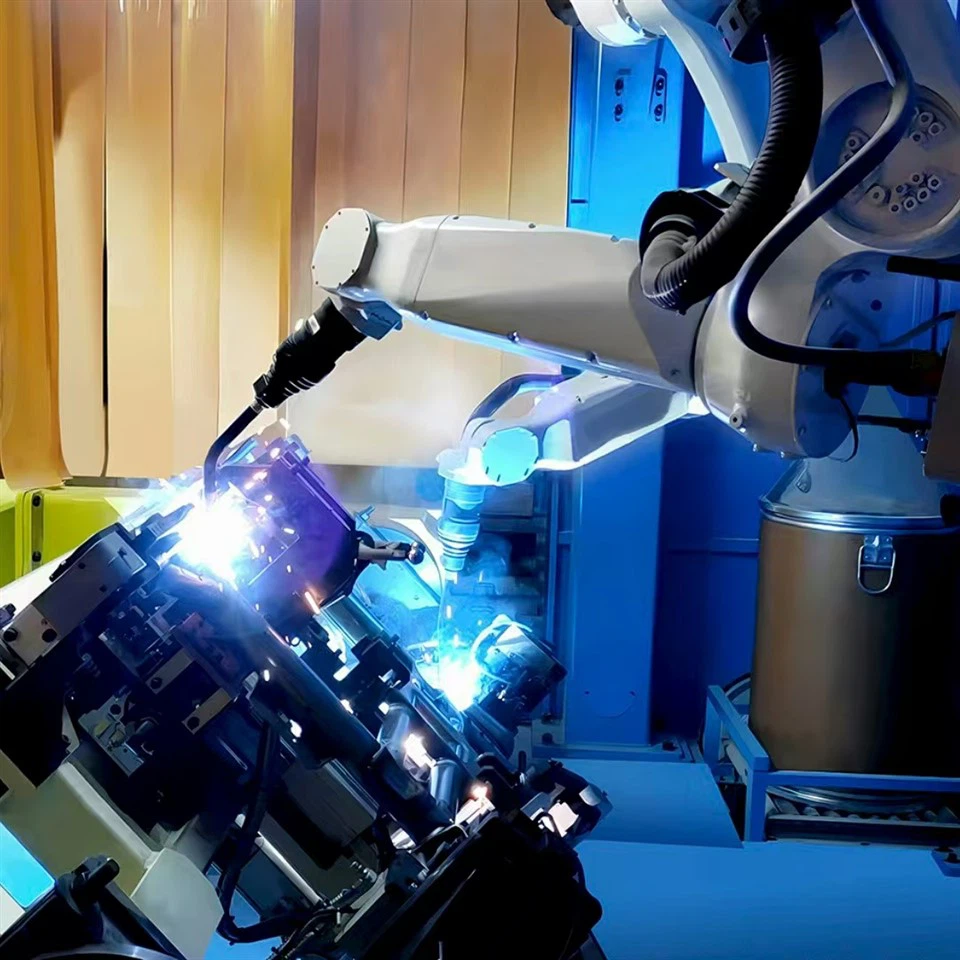
Understanding Intelligent Welding Robots
Intelligent welding robots are equipped with advanced sensors, algorithms, and control systems that enable them to perform welding tasks with high precision, speed, and flexibility. These robots can adapt to different welding conditions, adjust parameters in real-time, and even learn from past experiences to improve performance over time. Our product range includes the Multi-functional Integrated Welding Robot, Intelligent Handling Robot, and High Precision And Fast Welding Robot, each designed to meet specific customer needs.
Benefits of Integrating Intelligent Welding Robots
The integration of intelligent welding robots into existing production systems offers numerous benefits, including:
- Increased Productivity: Robots can work continuously without breaks, reducing cycle times and increasing output. They can also perform multiple welding tasks simultaneously, further enhancing productivity.
- Improved Quality: Intelligent welding robots can maintain consistent welding parameters, resulting in high-quality welds with minimal defects. This reduces rework and scrap, saving time and money.
- Enhanced Safety: Welding is a hazardous process that exposes workers to fumes, radiation, and heat. By replacing human operators with robots, companies can improve workplace safety and reduce the risk of accidents.
- Flexibility and Adaptability: Intelligent welding robots can be easily programmed to perform different welding tasks, making them suitable for a wide range of applications. They can also adapt to changes in production requirements, such as new product designs or production volumes.
Challenges of Integration
While the benefits of integrating intelligent welding robots are significant, there are also some challenges that need to be addressed. These include:
- Compatibility Issues: Existing production systems may not be compatible with intelligent welding robots, requiring modifications or upgrades to ensure seamless integration.
- Programming and Training: Programming intelligent welding robots requires specialized skills and knowledge. Companies may need to invest in training programs for their employees or hire external experts to ensure proper programming and operation.
- Cost: The initial investment in intelligent welding robots can be significant, including the cost of the robot, programming, installation, and training. However, the long-term benefits of increased productivity, improved quality, and enhanced safety often outweigh the initial costs.
Strategies for Successful Integration
To overcome the challenges of integrating intelligent welding robots into existing production systems, companies can adopt the following strategies:
- Conduct a Feasibility Study: Before investing in intelligent welding robots, companies should conduct a feasibility study to assess the compatibility of their existing production systems and the potential benefits of integration. This study should include a detailed analysis of the production process, the welding requirements, and the available budget.
- Choose the Right Robot: Selecting the right intelligent welding robot is crucial for successful integration. Companies should consider factors such as the welding process, the size and shape of the workpieces, the required precision and speed, and the available space in the production facility.
- Work with an Experienced Supplier: Working with an experienced supplier of intelligent welding robots can help companies overcome the challenges of integration. A reputable supplier can provide technical support, training, and after-sales service to ensure the smooth operation of the robots.
- Implement a Phased Approach: Integrating intelligent welding robots into existing production systems can be a complex process. Companies should consider implementing a phased approach, starting with a small-scale pilot project to test the feasibility and effectiveness of the integration. Once the pilot project is successful, the company can gradually expand the use of the robots to other areas of the production facility.
Case Studies
To illustrate the successful integration of intelligent welding robots into existing production systems, let's look at some real-world case studies:
- Case Study 1: Automotive Manufacturer: An automotive manufacturer was facing challenges with the quality and productivity of its welding process. The company decided to invest in intelligent welding robots to improve the situation. After conducting a feasibility study, the company selected our High Precision And Fast Welding Robot and worked with our team to integrate the robots into its existing production system. The result was a significant improvement in the quality of the welds, a reduction in cycle times, and an increase in productivity.
- Case Study 2: Aerospace Manufacturer: An aerospace manufacturer was looking for a way to improve the precision and flexibility of its welding process. The company decided to invest in our Multi-functional Integrated Welding Robot and worked with our team to develop a customized solution. The result was a highly precise and flexible welding process that met the strict requirements of the aerospace industry.
Conclusion
In conclusion, the integration of intelligent welding robots into existing production systems is not only possible but also highly beneficial. By increasing productivity, improving quality, enhancing safety, and providing flexibility and adaptability, intelligent welding robots can help companies stay competitive in the global marketplace. However, to ensure successful integration, companies need to address the challenges of compatibility, programming, and cost, and adopt strategies such as conducting a feasibility study, choosing the right robot, working with an experienced supplier, and implementing a phased approach.
If you are interested in learning more about our intelligent welding robots and how they can be integrated into your existing production system, please contact us for a consultation. Our team of experts will be happy to answer your questions and provide you with a customized solution that meets your specific needs.