Overview of the Steel Bar Bending Machine
The steel bar bending machine is specialized mechanical equipment used to bend straight steel bars into circular or arc-shaped forms. It holds an indispensable role in multiple fields such as construction and manufacturing. In construction, to build stable circular or arc-shaped structures-such as the arch rings of bridges and the steel frames of circular columns in buildings-a large number of arc-shaped steel bars with specific radii and angles are required. The steel bar bending machine can precisely process straight steel bars into the required shapes, ensuring the stability and safety of the building structure. In the manufacturing industry, such as the production of certain mechanical parts, if circular or arc-shaped steel bar components are involved, steel bar bending machines can also provide efficient and precise processing services.
Equipment Composition and Component Functions
Overall Structure
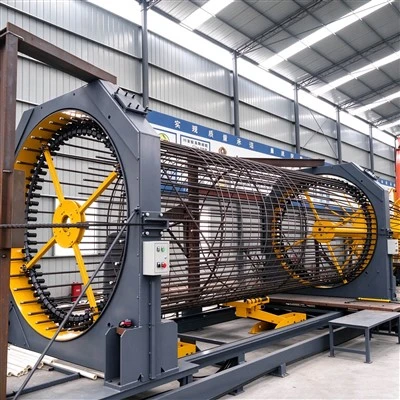
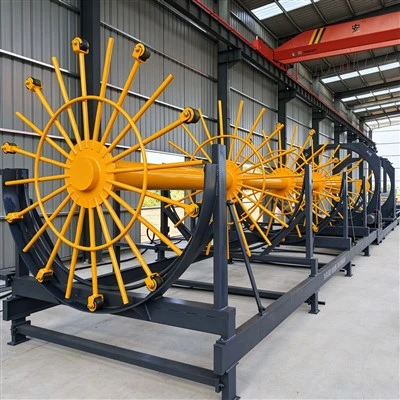
The steel bar bending machine mainly consists of the frame, bending mechanism, transmission system, control system, feeding device, and safety protection device. As the basic supporting structure, the frame is usually welded with high-strength steel, which provides sufficient rigidity and stability. It can withstand the significant forces generated during the bending of steel bars, ensuring that the equipment does not shake or deform during operation and guaranteeing the reliable operation of other components.
Key Components
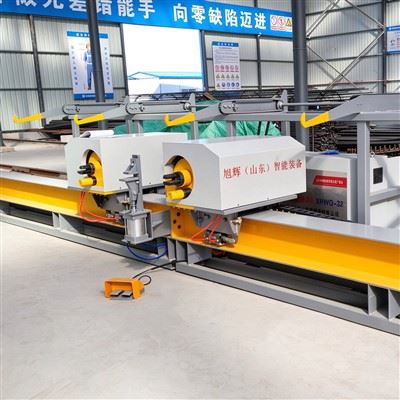
Bending mechanism: The bending mechanism is the core component responsible for the bending function. It mainly consists of the driving wheel, driven wheel (or bending die), and adjusting device. The driving wheel receives power through the transmission system and rotates, driving the steel bars to move. The driven wheel (or bending die) applies lateral pressure to the reinforcing bar according to the set bending radius and angle, causing it to bend. The adjusting device changes the distance and relative position between the driving and driven wheels (or bending die) to accommodate steel bars of different diameters and bending requirements. For example, when bending smaller-diameter reinforcing bars, the distance between the two wheels can be reduced. For a larger bending radius, the position of the bending die must be adjusted. The accuracy and manufacturing quality of the bending mechanism directly affect the bending accuracy and surface quality of the reinforcing bars. A high-precision bending mechanism can ensure that bending angle errors remain extremely small and that the bent reinforcing bars have smooth surfaces without cracks or damage.
Transmission system: The transmission system transfers power from the motor to the bending mechanism and feeding device, enabling them to operate at the required speed and torque. Depending on the design, it may include motors, reducers, gears, chains, belts, hydraulic pumps, or hydraulic cylinders. In mechanical transmission systems, the high-speed motor output is reduced in speed and increased in torque by a reducer, then transmitted to the bending mechanism and feeding device via gears, chains, or belts. In hydraulic systems, the motor drives a hydraulic pump to generate high-pressure oil, which is controlled by valves to drive the hydraulic cylinder, thereby powering the bending mechanism and feeding device. The performance of the transmission system directly affects the efficiency and stability of the machine. An efficient and stable transmission system ensures precise and reliable power transfer, reduces energy loss, and lowers the probability of failure during long-term operation.
Control system: The control system is the "brain" of the steel bar bending machine, responsible for operation control, parameter setting, monitoring, and fault diagnosis. Modern systems often use numerical control technology and include an operation panel, display, controller, and sensors. The operator inputs parameters such as bar diameter, bending radius, bending angle, and quantity via the panel. The controller generates control instructions and regulates the motor or hydraulic system accordingly. Sensors monitor real-time operating conditions-such as bar position, bending angle, motor speed, and current-and feed data back to the controller, which makes real-time adjustments. If a malfunction occurs, the control system detects it, displays fault information, and prompts maintenance, greatly improving efficiency and ease of use.
Feeding device: The feeding device accurately delivers straight reinforcing bars into the bending mechanism. Automatic feeding devices, using motors, conveyor belts, and rollers, enable automatic transportation of bars at the set speed and length. This improves accuracy and efficiency while reducing manual errors, especially in large-scale production. Advanced feeding devices may also have automatic centering, ensuring bars are aligned before bending and improving accuracy further.
Safety protection devices: Because bending involves high-speed rotation and significant forces, safety devices are crucial. These include protective fences, emergency stop buttons, overload protection, and leakage protection. The protective fence isolates hazardous areas, preventing accidental contact. The emergency stop button, placed in a convenient location, allows immediate shutdown in emergencies. The overload protection device cuts power if the load exceeds safe limits, preventing damage. The leakage protection device cuts power if electrical leakage is detected, safeguarding operators. Together, these devices ensure safe operation and protect both personnel and equipment.