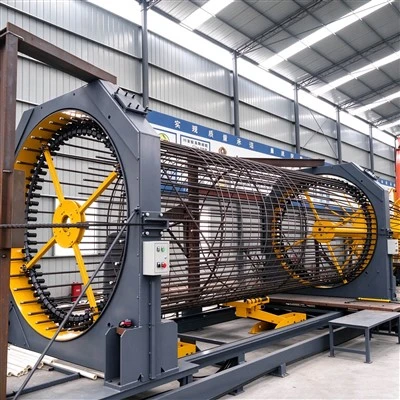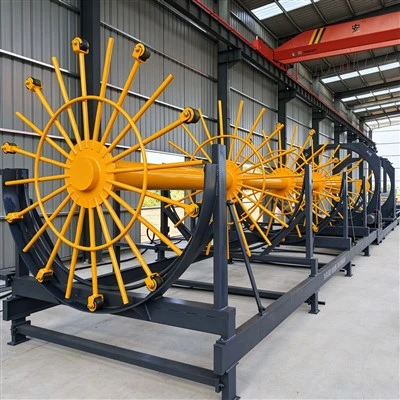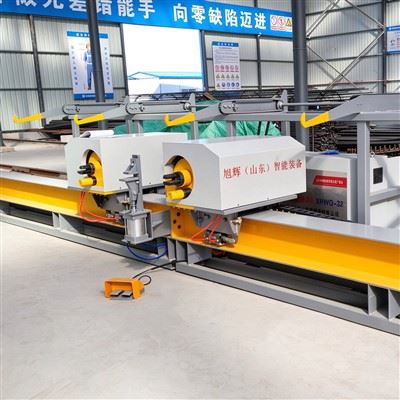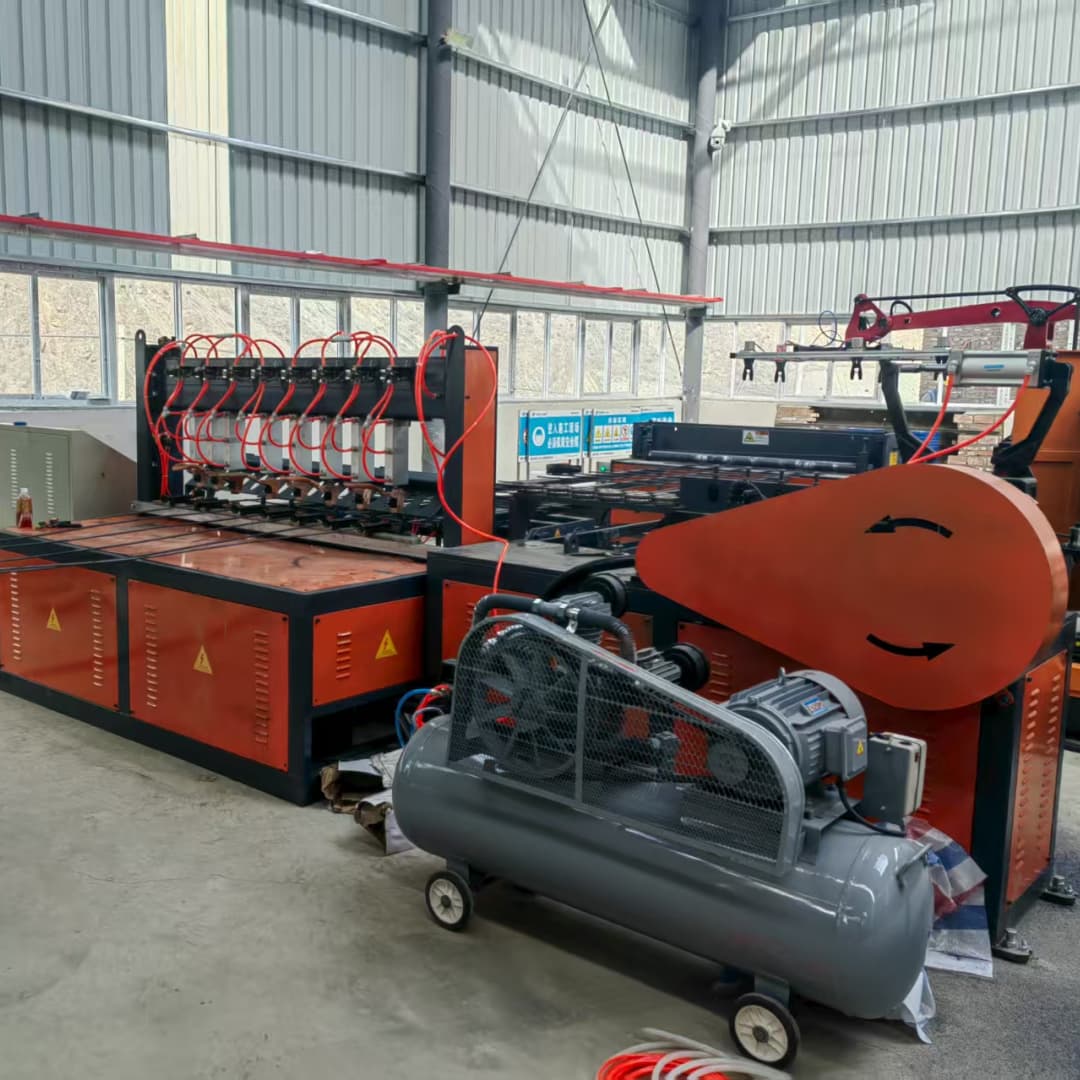
In modern industrial production, welding technology, as a key joining process, is widely applied in various fields. With the rapid development of automation technology, fully automatic welded wire mesh machines have emerged, bringing revolutionary changes to the welding industry. They not only greatly enhance production efficiency but also significantly improve welding quality, becoming important equipment for many enterprises to boost competitiveness.
Working Principle
- Principle of Resistance Welding
Most fully automatic welded wire mesh machines adopt the principle of resistance welding. When current passes through the metal wire to be welded, the inherent resistance of the wire generates heat at the contact point, causing it to quickly reach the melting point and achieve welding. During this process, pressure is applied to the electrodes to ensure close contact between the wires, allowing the welding to proceed smoothly.
For example, when welding steel mesh, the longitudinal and transverse steel bars are placed alternately. The electrodes apply pressure and current at the intersection points, instantly welding them together and forming a firm connection.
- Principle of the Control System
The fully automatic welded wire mesh machine is equipped with an advanced control system, usually based on a programmable logic controller (PLC). The operator inputs welding parameters-such as welding current, welding time, electrode pressure, and mesh size-through the control panel. The control system then precisely coordinates the actions of the wire feeding, welding, and cutting mechanisms according to these inputs.
For example, when welding meshes of different specifications, the operator only needs to enter the relevant parameters, such as mesh size and wire diameter, into the control system. The machine will automatically adjust the wire feeding speed, welding current, and welding time to achieve precise results.
Classification of welded wire mesh machines
- Classification by Welding Materials
Steel Bar Welded Mesh Machine
Specifically designed for welding steel bar mesh, this type is widely used in the construction industry-for example, in reinforcing floor slabs of high-rise buildings and producing steel bar frames for bridges. Its features include the ability to handle large welding currents, high welding strength, and compatibility with steel bars of different diameters, meeting diverse construction project requirements.
Wire Mesh Welding Machine
Mainly used for welding fine wire mesh, this machine is commonly applied in the production of protective nets, breeding nets, filter nets, and similar products. It demands high welding precision and can produce meshes with uniform openings and smooth surfaces.
Stainless Steel Mesh Welding Machine
Designed for the unique welding characteristics of stainless steel, this machine is used to produce stainless steel mesh products such as conveyor belt meshes for the food processing industry and filter meshes for the chemical industry. Because welding stainless steel is more challenging, special techniques and parameters are required. The machine ensures welding quality while meeting these technical demands.
- Classification by Degree of Automation
Semi-Automatic Welded Wire Mesh Machine
In this type, certain steps-such as wire feeding or adjusting mesh positions-still require manual assistance, while the actual welding process is performed automatically. Semi-automatic machines are suitable for small-batch, diverse production needs and are relatively low-cost, making them ideal for small enterprises or businesses just entering the welding field.
Fully Automatic Welded Wire Mesh Machine
From raw material feeding and welding to cutting and collecting finished products, the entire process is fully automated, requiring no manual intervention. These machines offer high production efficiency and stable welding quality, making them well-suited for large-scale, standardized production environments and major engineering projects.